Student Visa Refused? Why It Happens and How to Reapply Successfully in 2026

A student visa refusal arrives as a short letter that explains very little and feels final. It is neither as unusual nor as final as it appears. Canada refused more than half of all study permit applications in 2025, its toughest year in over a decade, and the UK, Australia, and several European countries have tightened their rules since.
The important thing to understand quickly is that in most countries there is no meaningful appeal. What there is instead is a second application, and a second application built properly succeeds far more often than people expect, because the majority of refusals turn on fixable things: a bank statement dated wrongly, a missing translation, a study plan that did not explain itself.
First, Read the Refusal Notice Properly
The refusal letter states the ground on which you were refused, usually by reference to a specific rule. That ground determines everything you do next, and the single most common mistake is reapplying without establishing it.
Refusals fall into three categories, and they are not equally serious.
Mechanical refusals are documentation failures: funds held for 27 days instead of 28, an uncertified translation, an expired language certificate, a missing signature. These are the most common and the easiest to fix. Correct the defect and reapply.
Credibility refusals turn on the officer not being satisfied you are a genuine student or that you will leave at the end of your stay. These require you to change the substance of the application, not just the paperwork.
Misrepresentation findings are the serious category. These allege you provided false information or withheld something material, and they carry bans of five years in Canada and up to ten years in the UK. Do not reapply without proper legal advice.
In Canada, request the officer's GCMS notes through an access to information request. These contain the caseworker's actual reasoning, which is far more specific than the refusal letter, and they are the only reliable basis for a stronger second application. Non-Canadians can file through a Canadian representative. Allow around 30 days.
Can You Appeal?
Mostly, no, and understanding this saves months.
Canada. A study permit refusal carries no appeal to a tribunal. The only formal route is judicial review at the Federal Court, which examines whether the officer made a legal error rather than whether the decision was correct, requires a lawyer, and takes many months. For nearly everyone, reapplying is faster and more likely to work.
United Kingdom. Student visa refusals generally carry no right of appeal. There is an administrative review where you believe the caseworker made a factual or procedural error, but it cannot consider new evidence. If your application was missing something, administrative review will not help; reapplication will.
United States. An F-1 refusal under section 214(b) cannot be appealed at all. You may reapply as often as you wish, but reapplying without new evidence or changed circumstances produces the same outcome, usually in a shorter interview.
Australia. Some refusals can be reviewed by the Administrative Review Tribunal, but only if you were in Australia when you applied. Offshore applicants generally cannot seek review, and reapplication is the practical route.
Schengen countries. Most do provide an appeal process, with deadlines that are often short, sometimes 15 to 30 days. If you intend to appeal a German, French, or Dutch refusal, check the deadline on the refusal letter immediately.
Why Applications Are Refused
Insufficient or unexplained funds
The most common ground everywhere. Officers are not only checking that the money exists; they are checking that it is genuinely available to you and that its origin is explicable.
A large deposit that appeared three weeks before the application, with no explanation, reads as borrowed money moved in to pass a test. Show the history. If a relative is funding you, provide their bank statements, proof of their income, a sponsorship letter, and evidence of your relationship.
Check the account holder rules. The UK accepts statements in your name, your parents' names, or a legal guardian's, and nobody else's. An uncle's account fails however genuine the arrangement.
Weak ties to your home country
This is the heart of most US and Canadian refusals, and the least addressed by applicants. The officer must be satisfied you will leave when your permission ends.
Evidence that helps: property, a job with a letter confirming the position is held open, dependants, a family business, a professional licence, or a defined role waiting for you. Many applicants supply none of this because nobody told them it mattered.
An unconvincing study plan
Officers ask why this course, at this institution, at this cost, at this point in your life. Applications that do not answer this invite the conclusion that study is not the real purpose.
Red flags include a course unrelated to your existing qualifications or career, a step backward in level, such as a masters holder applying for a diploma, or a programme available more cheaply at home with no explanation for the choice.
If any of these apply to you, explain it directly in a written statement rather than hoping it goes unnoticed. A career change has a reason; say what it is.
Documentation and consistency
Names spelled differently across passport, degree certificate and transcripts. Dates that do not reconcile. An employment letter that contradicts the CV. Translations without the translator's credentials. Each of these creates doubt out of proportion to its importance.
Where your name appears differently across documents, a sworn affidavit of name equivalence resolves it permanently and costs very little.
Undisclosed previous refusals
Every application asks whether you have been refused a visa by any country. Answer honestly. Refusals are shared between several countries, are routinely discovered, and a concealed one converts a survivable refusal into a misrepresentation finding.
Building the Second Application
Reapplying with the same file and better hope produces the same result. The second application has to be visibly different.
Fix the stated ground first, in writing. Include a covering letter that identifies the previous refusal, states the reason given, and sets out exactly what has changed and which document evidences it. Officers reviewing a repeat application want to see that the objection was understood.
Strengthen the finances properly. Hold the funds for longer than the minimum. Show the source. Pay a larger tuition deposit if you can, since a paid deposit is strong evidence of genuine intent.
Add the ties evidence you omitted. Employment letters, property documents, business registration, family responsibilities.
Write a proper statement of purpose covering why this course, why this country, how it fits your career, who is paying, and what you will do afterwards. Two pages, plain language, specific.
Tell your university. Institutions deal with refusals constantly, have staff who understand the rules, and can usually defer your place to the next intake, which removes the pressure to submit a rushed second attempt.
Country Notes for a Second Attempt
Canada. Get the GCMS notes before doing anything else. Since 2024 most applications also require a provincial attestation letter, and the financial requirement rose above CAD $20,000 for a single applicant, so an application built on older figures fails automatically. Graduate applicants face fewer restrictions than college applicants.
United Kingdom. Check the 28-day rule and the account-holder rule first, since together they account for a large share of refusals. If you were refused after a credibility interview, prepare more thoroughly for the second one: know your modules, your fees, and your funding source.
United States. A 214(b) refusal means the officer was not persuaded of your ties. Reapply only when something has genuinely changed, and at the interview answer briefly and specifically. Avoid saying you hope to gain experience in the US afterwards, which reads as intent to remain.
Australia. The Genuine Student requirement replaced the old temporary entrant test and places weight on your study and career coherence. Address it explicitly in your statement.
When to Change Course
After two refusals on the same ground, it is worth considering whether the destination is the problem rather than the application.
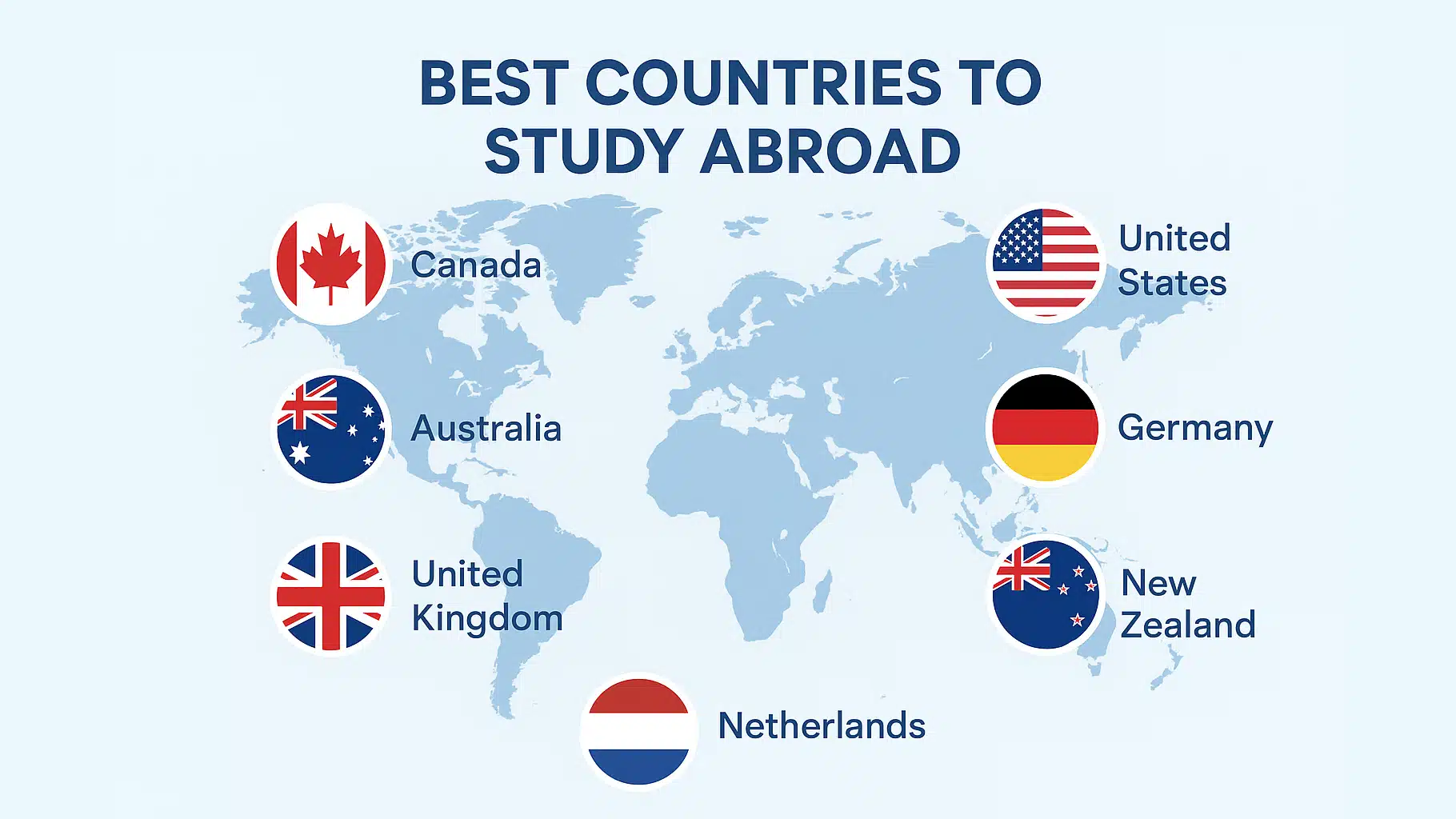
Refusal rates vary enormously by country of origin and by destination, and a profile that struggles in one system can be straightforward in another. Germany, Poland, Czechia, Turkey, Malaysia, and several others operate more mechanical processes: meet the documented criteria and the permit follows, with far less officer discretion over your intentions.
Cost matters here too. If the refusal turned on funds, a destination with a proof-of-funds requirement of €6,000 rather than £20,000 may be achievable now rather than in three years.
A refusal is not a judgement on your ability and it does not follow you permanently, provided it was not a misrepresentation finding. Most people who are refused once and apply again properly are approved. The ones who are not are usually those who resubmitted quickly without finding out why they were refused in the first place.
Telling Your University, and What They Can Do
Contact the international office the day you receive the refusal. This is not an admission of failure; institutions handle hundreds of these every year and they have staff whose job it is.
They can usually do three useful things. They can defer your offer to the next intake, which removes the pressure to rush a second application and preserves your place. They can reissue the CAS or letter of acceptance with corrected details if the refusal turned on a document error, which is common. And they can sometimes write a supporting letter addressing the specific concern raised, which carries weight because it comes from a licensed institution rather than from you.
Some universities also have staff who have seen the exact refusal ground many times for applicants from your country and can tell you which evidence tends to resolve it. This is free advice from people with a direct interest in your success, and it is consistently better than what you will find on a forum.
Ask about the tuition deposit at the same time. Most institutions refund it in full where a visa has been refused, provided you supply the refusal notice, though the deadline for claiming can be short. Some will hold it against a deferred place instead, which is usually the better option if you intend to reapply.
Getting Your Money Back
A refusal has costs attached, and several of them are recoverable if you act quickly.
Tuition deposits are refundable at most universities on production of the refusal letter. Check the refund policy, note the deadline, and submit the claim immediately rather than waiting to decide whether to reapply.
Visa application fees are almost never refunded. Neither are biometric or courier charges.
The Immigration Health Surcharge in the UK is refunded automatically when an application is refused, though it can take several weeks to appear. If it has not arrived after six weeks, chase it.
Accommodation deposits depend on the contract. University halls generally release you on a refusal; private landlords and student housing companies frequently do not, and this is worth checking before you sign anything in advance of a visa decision.
Flights booked before a visa decision are usually the largest unrecoverable loss. The straightforward lesson is not to book until the visa is granted, however tempting the fare.
Keep every receipt. If you reapply and are approved, several of these costs recur, and knowing the true total helps you decide whether a second attempt at this destination is the right use of the money.
Using an Agent or a Lawyer
After a refusal, applicants become a target for people selling certainty, and the distinction between the categories matters.
Education agents are recruiters paid commission by universities. Many are competent and some are the reason the first application failed, because they submitted a template application with generic documents. If your agent cannot explain the refusal ground to you in plain language, do not let them handle the second attempt.
Regulated immigration advisers and lawyers are a different category and are worth paying for in specific circumstances: a misrepresentation finding, a second refusal on credibility grounds, or a complex immigration history. In Canada only licensed consultants and lawyers may represent you for a fee, and the register is public. In the UK, advisers must be regulated by the IAA or be qualified lawyers. Check the register before paying anyone.
Nobody can guarantee a visa. Anyone who does is either lying or planning to submit false documents on your behalf, which converts a recoverable refusal into a multi-year ban that follows you.
For a straightforward documentation refusal, you almost certainly do not need paid help. Read the refusal notice, fix the defect, and reapply. Save the money for the application itself.
Protecting Your Future Applications
How you handle this refusal affects every application you make afterwards, including to other countries.
Declare it everywhere, always. Every visa application you complete for the rest of your life will ask whether you have been refused a visa by any country. Answer yes. Refusal data is shared between several governments, undeclared refusals are routinely discovered, and concealment is treated as deception rather than as an oversight.
A declared refusal is normal and survivable. Officers see them constantly. What they react badly to is discovering one you did not mention.
Keep the paperwork. The refusal notice, your full application, and the supporting documents. You will need them for the next application, and reconstructing what you submitted two years later is close to impossible.
Do not apply to three countries at once in a panic. Simultaneous applications built quickly tend to contain inconsistencies, and inconsistency across applications is itself a credibility problem.
Be careful with the resubmission clock. There is no formal waiting period in most systems, but an application filed a week after a refusal, with the same evidence, is refused faster than the first one and adds a second refusal to your record for no benefit.
The one refusal that is genuinely hard to recover from is a misrepresentation finding. Everything else is a setback with a defined fix, and the people who resolve it are the ones who found out exactly why they were refused before touching the next application.
For destination-specific requirements, see our guides to UK student visa requirements, studying in Canada, and the best countries to study abroad for free, several of which have lower financial thresholds and more predictable processes.