How to Build a Professional Network From Scratch in 2026: A Practical Guide for Career Changers and New Graduates

Somewhere between 70 and 85 percent of jobs are never posted publicly. That is not a motivational speaker's exaggeration. It shows up consistently across LinkedIn's own hiring data, Bureau of Labor Statistics research, and multiple independent industry studies through 2026, and it means that a job seeker spending most of their time on job boards is competing for a minority slice of the actual opportunities that exist, while missing the much larger share that get filled through referrals, internal moves, and direct outreach before a listing is ever written. If you are starting from scratch with almost no professional network, this gap is not bad news. It is the clearest possible argument for why building one, deliberately and starting now, is worth the effort.
This guide is written for people who feel like they have nothing to work with: no industry contacts, no alumni network worth mentioning, no LinkedIn history beyond a half filled profile. It walks through how to build real professional relationships from zero, the specific mechanics of an informational interview, and how to keep a network alive once you have started one, without resorting to the transactional, connection-collecting approach that makes networking feel fake in the first place.
Why This Matters More Than It Used To
70 to 85 percent of jobs are filled through networking and referrals, not public postings | Referred candidates are hired roughly 10 times more often than job board applicants | Job seekers who network actively find work in an average of 3.2 months versus 5.8 months for those relying mainly on applications
The numbers above are not fringe statistics. LinkedIn's own Talent Solutions data and multiple 2026 labor market analyses converge on the same range, and the reasoning behind it is straightforward from an employer's side. Posting a job publicly is expensive and slow, generating hundreds of applications that need to be filtered through, many from candidates who are not remotely qualified. A referral from a trusted employee or a known industry contact arrives pre-filtered, reduces hiring risk, and tends to close faster, which is exactly why employers increasingly lean on their networks before, or instead of, opening a public posting at all.
This shift has only gotten more pronounced as hiring has become more automated on the applicant side. When it is trivially easy to submit hundreds of applications with one click through AI-assisted tools, employers have responded by trusting warm introductions even more, not less, since a personal vouch has become one of the few remaining signals that cuts through an inbox full of near-identical applications. Networking is not a soft skill sitting alongside your actual qualifications anymore. For most roles above entry level, it is the primary mechanism through which qualified candidates get considered at all.
Starting From Nothing
If your current network is a handful of former classmates and coworkers you have not spoken to in years, the honest first step is reactivation, not new connection building. Reach out to people who already know your work, even if you have been out of touch for a while. A short, specific message, mentioning something real from your shared history and stating clearly that you are exploring new opportunities in a particular field, gets a dramatically better response rate than a generic LinkedIn connection request sent to a stranger. People who already have context on you are the lowest effort, highest return starting point, and most people underuse this group simply because reaching out after a long silence feels awkward.
From there, the research on strong ties versus weak ties matters more than intuition suggests. Strong ties, people who know your work directly, are valuable but limited, since they largely move in the same professional circles you already occupy. Weak ties, people you have met once, former classmates you were never close to, second degree connections, consistently generate more new opportunities precisely because they connect you to networks you do not already belong to. Do not dismiss a loose acquaintance as not worth reaching out to. That loose connection is statistically more likely to introduce you to something new than someone who already shares your entire professional world.
The Informational Interview, Done Properly
An informational interview is a short, low pressure conversation with someone working in a role, company, or industry you want to learn more about, and it is the single most effective tool available to someone building a network from zero, because it explicitly is not a job pitch. You are asking for insight, not asking for a job, which removes almost all of the awkwardness that makes cold outreach feel uncomfortable in the first place.
During the conversation itself, resist the urge to ask for a job or an introduction in the first meeting. Ask thoughtful questions, listen more than you talk, and follow up afterward with a genuine thank you that references something specific from the conversation. If a natural opportunity to ask about openings or introductions comes up later, in a follow up message or a second conversation, that is a completely different dynamic than asking for it in the very first exchange, and it tends to land far better because the relationship has had a moment to develop first.
Why Offering Value First Changes Everything
The most common reason networking feels transactional and uncomfortable is that it is approached as a series of asks rather than a series of exchanges. People who network well consistently offer something before requesting anything: a relevant article, an introduction to someone else in their circle, a specific piece of insight related to a problem the other person mentioned. This does not require having an established career or impressive credentials to offer. Even someone very early in their career can share a useful resource, make a small introduction between two people they know who would benefit from meeting, or simply follow up consistently and reliably, which is itself a form of value in a professional world where most people do not.
Reciprocity built this way compounds over time in a way that transactional networking never does. A relationship where you have already contributed something, even something small, before ever asking for help is fundamentally different from a cold ask to a stranger, and it is the difference between a network that quietly works in your favor over years and a stack of LinkedIn connections who barely remember meeting you.
Where to Meet People When You Have No Starting Point
Alumni networks are consistently underused relative to how effective they are. Most universities maintain active alumni databases, mentorship programs, and dedicated career events specifically because alumni tend to respond to fellow graduates at a noticeably higher rate than to cold strangers, driven by that immediate shared institutional connection. If you have not touched your university's alumni network since graduating, it is one of the highest return, lowest effort places to start.
Professional associations and industry specific communities, including active Slack and Discord groups organized around specific professions or industries, have become genuine hiring channels in their own right, not just discussion forums. Search for your specific industry alongside the platform name, join, and participate over time rather than immediately asking the group for job leads on your first day as a member. Industry events and conferences, even smaller local ones rather than major national conferences, put you in a room with people actively working in your target field, and showing up consistently as a contributor, asking good questions, offering your own perspective when relevant, builds recognition far faster than attending once and collecting business cards.
Using LinkedIn Without It Feeling Hollow
LinkedIn remains the most powerful single networking platform available in 2026, but its effectiveness depends entirely on how it is used. Sending large volumes of generic connection requests produces a large network that generates almost nothing, since none of those connections have any actual relationship behind them. A smaller number of connection requests, each with a short personalized note explaining why you are reaching out, referencing something specific about the person's work or background, converts into real relationships at a dramatically higher rate.
Posting and commenting with genuine substance, rather than generic engagement bait, is also worth doing consistently rather than sporadically. Recruiters and hiring managers increasingly notice candidates who demonstrate real expertise or thoughtful engagement with their field over time, since it functions as a form of visible track record that a static resume cannot show. This does not require posting daily or performing an online persona. A thoughtful comment on someone else's post, a short reflection on a project you worked on, or a genuine question posed to your network periodically all build a visible presence without requiring constant content production.
Younger job seekers are also increasingly building professional visibility outside LinkedIn entirely, through platforms like TikTok, niche Discord communities, and video-based portfolios, a trend that reflects a broader generational shift in how professional reputation gets built and signaled. This does not mean LinkedIn has become irrelevant. It remains the default platform where recruiters and hiring managers actively search for candidates, and it should stay the anchor of any networking strategy. But treating it as the only channel worth investing in, particularly early in a career, means missing communities where a meaningful and growing share of informal hiring conversations are now happening.
Keeping a Network Alive Once You Have Built One
The single biggest failure mode in networking is building relationships only while actively job searching and then letting them go completely dormant the moment you land a role. A relationship maintained with an occasional check in, a congratulations on a promotion, a relevant article shared without an ask attached, carries real weight the next time you need something. A cold reach out after two years of total silence, timed suspiciously close to when you clearly need a favor, carries almost none.
A simple, sustainable habit is a periodic check in, roughly every six to nine months, with people in your network who matter to your career, even when you are not job searching. This does not need to be elaborate. A short message noting something you saw related to their work, or a genuine update on what you have been doing, keeps the relationship active without requiring a major time investment. This is the exact same principle recruiters use when building relationships with executive candidates well before those candidates are actively looking, and it works the same way in reverse for job seekers building relationships with people who might one day refer them somewhere.
If Networking Feels Fundamentally Uncomfortable
A lot of advice on this topic assumes everyone is equally comfortable striking up conversations with strangers, and that assumption leaves a lot of capable people feeling like networking is simply not something they are built for. It helps to reframe what networking requires. It does not require being the loudest or most outgoing person in a room. The informational interview format described earlier works particularly well for people who prefer one-on-one conversation over group settings, since it is structured, has a clear purpose, and ends at a predictable time, none of which is true of an open networking mixer.
Written outreach plays to the same strength. A thoughtful, well-drafted message sent over LinkedIn or email allows time to think through exactly what you want to say, without the pressure of live conversation, and many of the strongest professional relationships in a career start entirely through written exchanges before ever becoming a phone call or in-person meeting. If in-person events drain you, there is no requirement to force yourself into them regularly. Smaller, more structured formats, one-on-one coffee chats, written informational interview requests, and small online communities, can build an equally strong network over time without requiring a personality type that does not come naturally to you.
Mistakes That Make Networking Feel Fake, and How to Avoid Them
The single biggest mistake is treating every interaction as a means to an immediate end. Reaching out to someone only when you need something, and disappearing the moment that need is met, is noticeable, and people remember it. The fix is not complicated, but it does require patience: build the relationship first, let the value flow in both directions over time, and treat any specific ask as something that emerges naturally from an existing relationship rather than the entire reason the relationship exists.
A second common mistake is collecting connections without any follow through. Attending an event, exchanging a dozen LinkedIn connections, and never following up with any of them individually produces a large but functionally useless network. A single specific follow-up message sent within a day or two of meeting someone, referencing something particular from your conversation, converts a business card exchange into an actual relationship far more reliably than the connection request alone ever will. The third mistake is over-scripting outreach to the point that it reads as generic. A message that could be sent to literally anyone in a given industry, with only the name changed, gets ignored at a much higher rate than one that clearly required the sender to read the recipient's profile or recent work first.
How to Tell Whether It Is Working
Because networking does not produce an immediate, obvious result the way submitting a job application does, it can be hard to tell whether the time invested is paying off. A few concrete signals are worth tracking instead of relying on gut feeling. Response rate to your outreach messages is one clear metric: if fewer than roughly one in five personalized messages gets any reply at all, the message itself, not the recipients, is usually the problem, and it is worth revisiting how specific and easy to respond to your outreach is. A second signal is whether informational interviews are leading to second conversations or introductions over time, even without you directly asking for them, since organic introductions are one of the clearest signs a relationship has moved past a single polite exchange into something the other person is willing to extend on your behalf.
The clearest long-term signal is whether you are hearing about opportunities before they are posted publicly, whether that is a colleague mentioning their team is hiring before the role goes live, or a former informational interview contact reaching back out with a specific opening in mind. That is the actual hidden job market functioning in your favor, and it typically takes several months of consistent relationship building before it starts showing up reliably, which is worth knowing going in so early quiet periods do not feel like proof the approach is not working.
A Simple Ninety Day Starting Plan
For anyone who wants a concrete starting structure rather than a general philosophy, a realistic ninety day plan looks something like this. In the first month, focus entirely on reactivation and mapping: reach out to five to ten people you already know but have lost touch with, and separately make a list of twenty to thirty people currently working in roles or companies you are interested in, whether or not you have any existing connection to them. In the second month, begin outreach to that second list, aiming for two to three informational interview requests a week rather than a large batch sent all at once, since a smaller, more sustainable pace also means each conversation gets proper follow-up rather than being lost in a pile of unanswered threads.
In the third month, shift focus toward consistency and visibility: continue informational interviews at a steady pace, begin engaging more visibly on LinkedIn through thoughtful comments and occasional posts about your own work or field, and start reconnecting with the people from month one with a genuine update rather than a renewed ask. By the end of ninety days, a new starting network of thirty to fifty real contacts, at varying levels of relationship depth, is a realistic outcome for someone who followed this pace consistently, and that is a foundation that continues compounding well beyond the initial three months if maintained with the periodic check-ins described earlier.
For Career Changers Specifically
If you are changing industries entirely rather than searching within your existing field, networking carries even more weight than usual, because your resume alone will not tell a convincing story about why you belong in a new field. Employee referrals and informational interviews become the primary mechanism through which someone with transferable but non-obvious experience gets a fair look, since a human contact who can vouch for your capability and explain the connection between your background and the new field does work your resume alone cannot do. Actively seek out informational interviews with people who have made a similar transition themselves, since they are often the most generous with advice, having recently navigated the exact uncertainty you are facing now, and they can offer a realistic, specific picture of what the transition requires rather than generic career advice.
Building a network from nothing takes real time, typically months rather than days, and the temptation to skip straight to job board applications because they feel more immediately productive is understandable. But the data is consistent enough to take seriously: the majority of opportunities, especially the better ones, are moving through relationships rather than public postings, and every week spent building genuine professional relationships is a week spent competing for a much larger, much less visible share of the job market than the one everyone else is fighting over on public job boards.
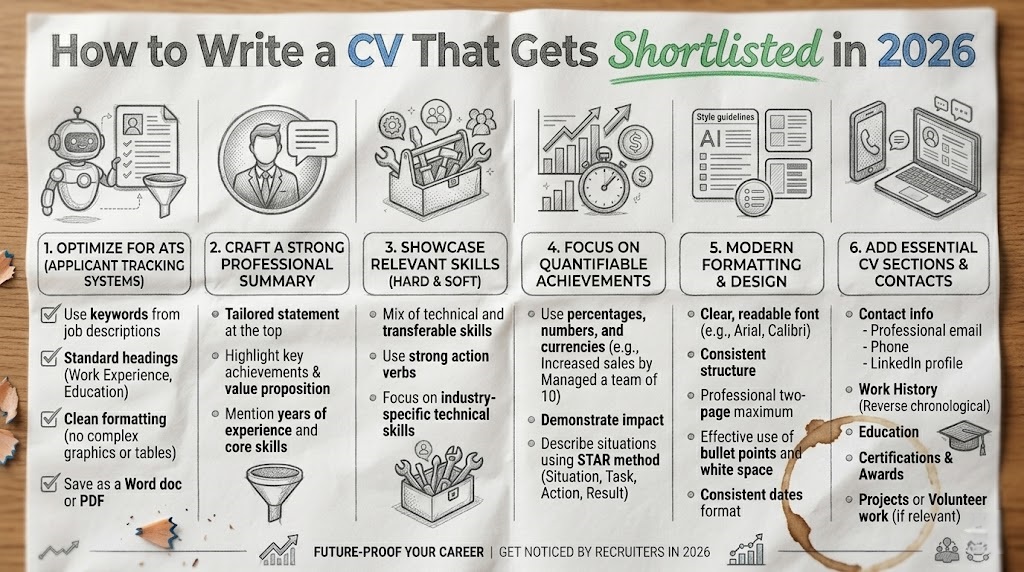
Once your network starts generating real conversations, having a strong resume and LinkedIn profile ready matters just as much as the networking itself. See our guides on how to write a CV that gets shortlisted and LinkedIn profile tips to get recruiters to find you first to make sure the rest of your professional presence matches the relationships you are building.