Job Interview Questions and Answers in 2026: What Top Companies Are Asking

The gap between candidates who get offers and candidates who reach the final round and still get rejected is almost never credentials. Both groups have the qualifications. The difference is preparation depth and the ability to translate experience into specific, concrete answers under pressure. Interviewers remember candidates who give clear, structured responses with real examples. They forget candidates who give technically correct but vague answers about what they generally tend to do. This guide covers the questions that matter most in 2026, the framework for answering them well, and the preparation approach that produces results across different interview formats.
The STAR Framework: Still the Foundation
Behavioral questions follow the premise that past behavior predicts future performance. The standard framing is "Tell me about a time when..." and the expected answer structure is STAR: Situation (briefly set the context), Task (what you specifically needed to do), Action (what you did and how - this is the most important part), Result (what happened as a measurable outcome). The mistake most candidates make is spending too long on Situation and Task and rushing through Action and Result. The committee already has your CV - they know the general context. They want to hear what you specifically did and whether it worked.
Result is where most candidates are weakest. "The project was successful" is not a result. "We delivered the project three weeks early, the client renewed their contract for two additional years, and the approach we developed became our department's standard for similar projects" is a result.
The Questions Worth Preparing For in 2026
Tell me about a time you worked on a project where the requirements changed sharply mid-way through.
This is the adaptability and stakeholder management question. What they're assessing: whether you handle ambiguity constructively, whether you communicate proactively when things change, and whether you can redirect team or project energy without losing momentum. Prepare a specific story where you faced scope change and focus most of your answer on what you did to adapt - communication steps, priority resets, stakeholder conversations.
How have you incorporated AI tools into your work, and where do you see their limitations?
This is new and increasingly standard at tech-adjacent companies. The answer they don't want: "I use ChatGPT to write things sometimes." The answer they do want: a specific, practical description of how you've used AI tools to improve your workflow, combined with honest acknowledgment of where you've found them unreliable or where human judgment remained essential. This demonstrates both digital literacy and critical thinking. If you haven't used AI tools in your work, start now - even basic familiarity with Claude, ChatGPT, or Copilot in a professional context will inform your answer.
Describe a situation where you disagreed with a decision made by your manager or team. How did you handle it?
This is an emotional intelligence and professional maturity question. The right answer shows that you can raise a genuine concern professionally and constructively, not that you always comply silently or that you escalated aggressively. Structure your answer to include: how you raised the concern, what happened in the conversation, and what you did once a decision was made - whether or not it was the one you recommended. Companies don't want people who always say yes; they don't want people who make disagreements personal or disruptive either.
What's your approach to prioritizing when you have multiple competing deadlines?
This sounds like a time management question but it's really about judgment and communication. A strong answer describes your actual system: how you assess urgency versus importance, how you communicate proactively when you foresee a crunch, and a specific example of a time you navigated competing demands successfully. Weak answers describe vague "to-do list" systems without specifics or without the communication component.
Questions You Should Be Asking the Interviewer
The questions you ask at the end of an interview are a signal as much as the answers you give. Questions that demonstrate genuine interest and thoughtfulness: "What does success look like for this role in the first ninety days, and how is it typically measured?" "What are the main challenges the person in this role is likely to face in the first year?" "How does the team typically handle disagreements on priorities?" "What do people on this team find most energizing about their work?" These questions get you real information and show the interviewer that you're thinking seriously about the role, not just trying to get a job.
The One Preparation Most Candidates Skip
Practice your answers out loud. Not in your head. Out loud, ideally with a person who can give you feedback, but even alone in a room or into a voice recorder. The gap between how an answer sounds in your head and how it sounds when spoken is enormous until you've practiced. The specifics you think you'll remember often don't come up smoothly under pressure. The three stories you plan to use for behavioral questions need to be retrievable quickly, not something you have to think hard to reconstruct mid-interview. Practice until you can tell each story clearly in under two and a half minutes.
The Rounds You Should Expect, and What Each One Is Really Testing
Most professional hiring runs three to five conversations, and each has a different purpose. Candidates who prepare one generic performance and repeat it four times tend to lose somewhere in the middle.
The recruiter screen lasts twenty to thirty minutes and is a filter, not an evaluation. The recruiter is checking three things: that your experience matches what the posting says, that your salary expectation is inside the band, and that you can hold a normal conversation. They are usually not technical. Long, detailed answers hurt you here. Keep it crisp, confirm the logistics, and get to the next round.
The hiring manager conversation is the one that decides. This person owns the problem you would be hired to solve, and they are listening for whether you have solved something similar. This is where your prepared stories earn their keep, and where you should be asking about the team's actual workload and what the last person in the seat struggled with.
The panel introduces a complication people underestimate: three or four interviewers who will compare notes afterwards. Telling the same story twice to different people is fine and normal. What is not fine is giving two of them contradictory versions of why you left your last job. Assume everything is pooled.
The technical or functional round tests whether you can do the work. In engineering that means code; in finance a model; in marketing a channel audit; in policy a briefing note. Interviewers at this stage care more about how you reason than whether you reach the textbook answer, which is why narrating your thinking aloud matters more than arriving somewhere quickly.
The final round is frequently a values or cross-functional check, sometimes with someone a level or two above the hiring manager. The decision is often already leaning one way. The purpose is to confirm there is no reason to reverse it, so composure counts for more than brilliance.
Video Interviews and the Recorded Round
Most first-round interviews now happen over video, and a growing number never involve a live person at all.
For live video, the technical basics are worth ten minutes of preparation because failing them is unrecoverable. Put the light in front of you rather than behind. Raise the camera to eye level so you are not filming your ceiling. Test the microphone you will use, not the one you assume works. Have a phone number ready for the interviewer in case the connection collapses, and say at the start that you will call if you drop: it converts a disaster into a minor inconvenience.
The subtler problem with video is that the natural feedback loop is broken. You cannot read a room through a laptop, and interviewers give far less encouragement on camera than in person. Candidates read the flat expressions as disapproval and start talking faster. Resist that. Finish your answer, stop, and let the silence sit. Silence over video feels twice as long as it is.
The one-way recorded interview is a harder format, and an increasingly common one. You are given a question, a countdown, and one or two takes. There is nobody to react to, which strips away everything conversational about the exercise. Three things help: write your key points on a sticky note placed directly beside the camera lens rather than on the screen, treat the first question as a throwaway warm-up by recording a practice answer before the real attempt, and speak slightly slower than feels natural. Candidates consistently rush these. If a retake is offered, use it, the system is not scoring your spontaneity.
Take-Home Assignments: How Much Is Reasonable
Somewhere between the second and third round, many employers now ask for a piece of work. This is a reasonable request in principle and an abused one in practice, so it is worth knowing where the line sits.
A fair assignment takes two to four hours, uses an invented or anonymised scenario, and comes with a clear brief and a deadline of several days. An unfair one asks for fifteen hours of unpaid work on a live business problem the company is currently facing. The second kind is not an assessment; it is free consulting, and you are allowed to decline it. A polite response that offers an alternative usually works: "I'd rather not commit a full weekend, but I'm happy to walk through how I'd approach this in a live session, or share a comparable piece of past work."
When you do take one on, cap the time yourself and say so in the submission. "I limited this to three hours; with more time I would have validated the second assumption and added a sensitivity check." That single line does two useful things. It signals judgement about scope, which is itself a senior trait, and it pre-empts criticism of the parts you knowingly left rough.
Include your reasoning, not only your output. Reviewers are trying to work out how you think. A tidy answer with no visible workings tells them less than a rougher one that shows which options you considered and why you discarded them.
The Questions That Catch Strong Candidates
A handful of standard questions are answered badly by people who are otherwise well prepared, usually because the obvious answer is a trap.
"What's your greatest weakness?" The disguised strength ("I care too much," "I work too hard") is transparent and lands as evasion. So does a genuine disqualifier. The workable answer names a real limitation that is not central to the job, then shows what you have built to manage it. "I'm slow to delegate because I'd rather just do it myself. I now set a rule that anything recurring gets handed over by the third time it comes up, which has forced me to write things down properly."
"Why are you leaving?" Never criticise the current employer, even when the criticism is deserved and obvious to everyone. Interviewers are not judging whether you are right; they are imagining how you will describe them in two years. Point forward instead of backward: what the new role offers that the current one structurally cannot.
"What are your salary expectations?" Answer with a researched range and a reason, not a single number and not a refusal. "Based on what I've seen for this scope in this market, I'd expect somewhere in the region of X to Y, and I'd want to understand the full package before being firm." Our salary negotiation guide covers the sequencing in detail.
"Tell me about a failure." Choose something that failed. Candidates offer a near-miss that resolved well, and the interviewer notices the dodge. Pick a real one, own your part without theatrics, and spend most of the answer on what changed in your practice afterwards.
"Where do you see yourself in five years?" Nobody believes the polished corporate answer and nobody wants to hear that you plan to leave. Describe the kind of problem you want to be trusted with rather than a title you want to hold.
When You Do Not Know the Answer
It will happen, and how you handle it is often worth more than the answer itself would have been.
Bluffing is the one response that reliably fails. Interviewers ask about things they know well, and the invented answer is obvious to them long before you finish it. Guessing while labelling it a guess is fine. Saying you do not know and then showing how you would find out is better than fine, it is what the job usually looks like.
"I haven't worked with that directly. The closest thing I've done is X, and my instinct would be to start by checking Y. Is that roughly how the team approaches it?" That answer is honest, demonstrates reasoning, and turns a dead end into a conversation. Very few candidates do it, which is exactly why it stands out.
If you freeze, ask for a moment. "Give me a second to think about that properly" is a complete and acceptable sentence, and interviewers respect it more than the sound of someone talking while they search for a point.
Questions They Should Not Ask
In most jurisdictions, interviewers may not ask about marital status, children or plans to have them, religion, age, health or disability, sexual orientation, or, increasingly, your current salary. In the UK, most of the EU, Canada, Australia, and a growing list of US states, several of these are unlawful. Many interviewers ask anyway, usually out of carelessness rather than malice, and often while trying to be friendly.
You have three options and all are legitimate. Answer it, if you do not mind. Deflect to the underlying concern, which is often what they were clumsily reaching for: asked about childcare, you can say "I can commit to the hours and the travel this role needs." Or decline it plainly: "I'd rather keep that separate from the application, but I'm happy to talk about availability."
Salary history deserves its own note. Where the question is banned, you are entitled to say so pleasantly and redirect to expectations. Where it is legal, you are still not obliged to disclose. Anchoring the offer to what you earned before is precisely how underpayment follows people across jobs.
Treat a persistent or hostile response to any of these as information about the employer. It usually is.
What the Interview Tells You About Them
You are also assessing, and some signals are reliable enough to act on.
Watch how they describe the person who held the role before you. Vagueness, or a quick change of subject, often means a departure nobody wants to explain. Ask directly whether the role is new or a replacement, and if a replacement, what happened.
Ask what the last two weeks looked like for the team. Generalities about culture are marketing; a specific account of recent work is evidence. A team that cannot describe its own fortnight is usually either disorganised or in the middle of something it is not telling you about.
Pay attention to process. Interviews rescheduled three times, a panel that has clearly not read your CV, or a brief that changes between rounds are not unlucky accidents. They are a preview of how the organisation runs.
Finally, notice how they respond to a hard question from you. Asking what the main frustration in the team is should not produce defensiveness. Somewhere reasonable will give you a real answer, because everywhere has one.
Following Up Without Damaging Your Position
Send a short note within twenty-four hours to each person you spoke with, or to the recruiter if you lack addresses. Four or five sentences: thanks, one specific thing from the conversation that stuck with you, one line that strengthens an answer you felt was thin, and a clear statement that you want the role. Interest is a real factor in close decisions, and candidates routinely forget to express it.
Keep it specific to that conversation. A template that could have been sent to any employer reads exactly like what it is.
On timing: ask at the end of the final round when they expect to decide, then wait until that date has passed before chasing. One follow-up after the stated deadline is reasonable. A second, a week later, is the outer limit. Beyond that you are not demonstrating enthusiasm, you are demonstrating that you do not read signals, and hiring teams discuss it.
Silence after a final round is common and rarely means what candidates fear. Internal candidates appear, budgets freeze, the panel disagrees, someone goes on leave. None of it is about you, and none of it is worth the fortnight of re-reading your own answers. Keep applying elsewhere until an offer is signed, which is the only point at which a process is finished.
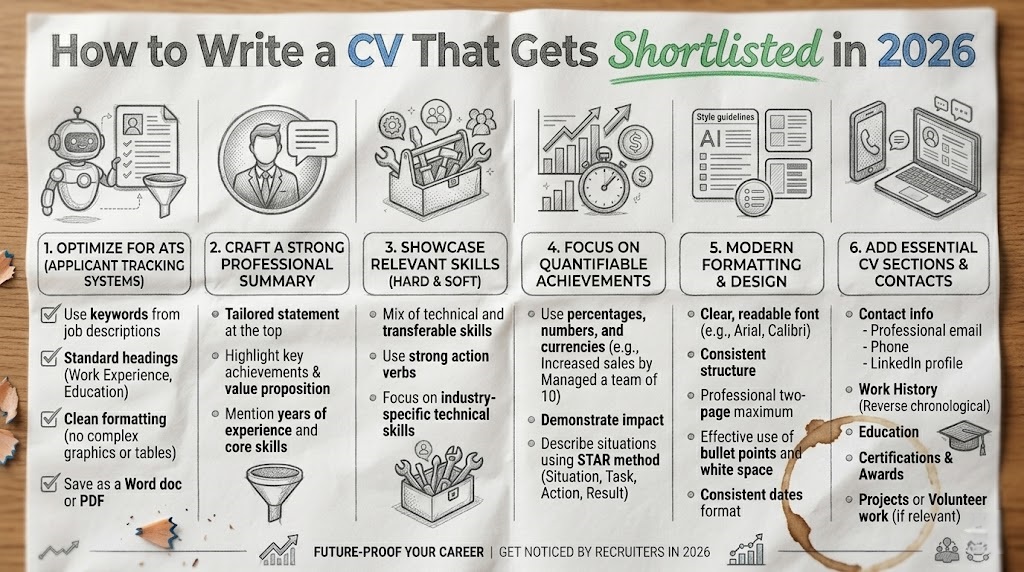
If the answer is no, ask once for feedback. Most employers give nothing useful, but occasionally someone tells you something worth knowing, and it costs one email to find out. For the document that gets you into the room in the first place, see our guide to writing a CV that gets shortlisted.