How to Get a Fellowship With No Experience: Insider Tips From Past Recipients
The most common reason strong candidates do not apply for competitive fellowships is a belief that they have not done enough yet. In practice, this belief is almost always wrong, and the mismatch between what applicants think fellowship committees are looking for and what those committees are evaluating is responsible for a significant share of missed opportunities. Someone who has organized community programs, managed volunteer teams, and published policy writing has a competitive fellowship profile. The gap is rarely in the experience. It is almost always in how that experience is framed and presented.
What "Experience" Means to Fellowship Committees
Fellowship committees are not primarily looking for an impressive resume. They're looking for evidence of three things: that you've already started doing work in the direction the fellowship is designed to support, that you can articulate what you want to learn or accomplish and why this fellowship specifically helps you do it, and that there's reasonable evidence you'll do something meaningful after the fellowship. Not great things. Not world-changing things in the first year. Something meaningful and specific.
The "experience" that matters is whatever work you've been doing that's relevant to the fellowship's mission. That could be formal employment, but it could just as easily be community organizing, student leadership, freelance projects, academic research, volunteer coordination, or content you've created. The question isn't what it looked like on a payslip - it's whether you can describe it in terms of outcomes and what you learned from it.
Programs That Are More Accessible for Early-Career Applicants
YALI Regional Leadership Centers
Explicitly designed for emerging leaders aged 18–35. The program looks for people who are in the early stages of building their impact, not those with established organizations and proven track records. Four centers across Africa with multiple cohorts per year. yali.state.gov/rci.
Obama Foundation Programs
The Obama Foundation Scholars program at Columbia University and the Obama Foundation Leaders in Europe/Africa programs are specifically designed for people early in their leadership journey rather than established leaders. Eligibility requirements tend to be more flexible on formal credentials and more focused on potential and early demonstrated commitment. obama.org/programs.
Atlas Corps Fellowship
Atlas Corps places international professionals in US nonprofit organizations for 12–18 months. The selection focuses on capacity to learn and contribute, not on an established track record of independent impact. If you have at least one to two years of professional experience in a relevant field, you're eligible. atlascorps.org/apply.
How to Reframe What You Have
Here's the exercise I recommend to anyone who thinks they don't have enough experience for a fellowship application. List every project, role, or activity you've been involved in over the last three years - paid or unpaid, formal or informal. For each one, write down: what was the problem or gap it was addressing, what did you specifically do, and what happened as a result. If you did it for at least three months and can describe those three things, it counts as relevant experience for most fellowship applications.
The reframing isn't making yourself sound more impressive than you are. It's connecting what you've done to the language and criteria that fellowship applications use. A student who "ran a book club at her university" is describing the same activity as someone who "coordinated a student-led literacy program for 40 participants over two semesters, facilitating eight discussion sessions and organizing two reading events." The second version demonstrates leadership, coordination, and program management skills. It's the same activity - described in the language that shows its value.
The Honest Truth About Rejection
Most people who eventually win competitive fellowships applied more than once before being selected. The Mandela Washington Fellowship has alumni who applied four and five times. This isn't a failure statistic - it's a signal that the application process itself builds the skills and self-knowledge that eventually produce a winning application. Each application forces you to articulate your experience more precisely, clarify your goals, and understand more deeply what the program is for. If you apply once, get rejected, and don't apply again, you've lost the learning. Apply again, even if it feels uncomfortable.
What Committees Mean When They Say "Potential"
Early-career applicants read the word potential as a consolation for having no record, which gets the meaning backwards. Committees assessing potential are looking for evidence, just a different kind.
What they are trying to establish is trajectory: whether the direction you are travelling in is clear, deliberate, and accelerating. A candidate who did one thing at nineteen, a related thing at twenty-one, and a more demanding version of it at twenty-three has demonstrated potential. A candidate with an impressive but unconnected list of activities has demonstrated availability.
This is why the coherence of an application matters more than the weight of it at this stage. Three connected experiences beat eight unconnected ones, because three connected ones let the reader predict what you will do next. Selection is, at bottom, an act of prediction.
The second thing behind the word is initiative. Committees distinguish sharply between things that happened to you and things you caused. Being selected for a programme is pleasant and says more about the selectors than about you. Starting something, however small, that would not exist otherwise is the signal they are reading for.
The third is responsibility under constraint. Having run a project with no budget, no staff, and no authority is more informative than having participated in a well-resourced one, because it shows what you do when nothing is provided. Applicants routinely downplay exactly this experience because it sounds modest.
Write the application to answer the prediction question directly. Where you have been, where you are going, and why this programme is the step between them.
Volunteering and Side Work That Counts
Not all unpaid experience carries weight, and the difference is consistent enough to plan around.
What counts is work where you held responsibility for an outcome. Coordinating a vaccination drive across four communities counts. Attending the training day for it does not. The distinction is whether something would have gone differently had you not been there.
Duration matters more than prestige. Two years with a local organisation demonstrates commitment and produces a referee who has watched you develop. A fortnight with an internationally recognised body produces a certificate and nothing else. Committees have seen enough short international placements to discount them.
Specificity in the description is what converts the experience into evidence. "Volunteered with a youth organisation" tells a reader nothing. "Ran the Saturday literacy sessions for two years, growing attendance from nine children to forty-three and training four other volunteers to lead sessions" tells them what you are capable of.
Work that pays badly counts as fully as work that pays nothing, and applicants sometimes hide low-status employment. A candidate who supported a family by working retail while studying has demonstrated something relevant about reliability and time management, and framing it is stronger than leaving an unexplained gap.
The categories that reliably carry weight: leading a team, however small; managing money, however little; teaching or training others; organising an event with real logistics; building something that outlasted your involvement.
Starting Something Small and Real
The most effective response to having no record is to build one, and the timescale is shorter than most applicants assume.
The mistake is thinking in terms of founding an organisation. Committees are not looking for founders. They are looking for people who identify a problem, act on it, and produce something checkable. That can be done in six months with no money.
Workable examples, all of which have appeared in successful applications: a weekly tutoring group for secondary students preparing for a national examination; a documented survey of a local problem that nobody had measured; a repair or training service for a specific community need; a small online resource that people use; a campaign that changed one institutional decision.
Three features make such a project count. It has to be documented (numbers, dates, photographs, a written account) because unrecorded work cannot be assessed. It has to involve other people, since work done alone shows capability but not the ability to mobilise. And it has to continue long enough to have a result, which generally means at least six months.
Start it now rather than after the application opens. A project begun in January and described in a December application has a year of history behind it. One begun in November has an intention.
Where you already work, the equivalent move is to take on something outside your job description and own it. That is the same signal in an employed setting.
Programmes With Low Barriers to Entry
Some fellowships are designed for people at the start, and applying to these rather than to programmes requiring a decade of seniority is the most straightforward improvement available.
Atlas Corps places early-career professionals from around the world in host organisations in the United States, requiring as little as two years of experience and a bachelors degree.
The YALI Regional Leadership Centers accept applicants from eighteen upward and explicitly target people early in their leadership rather than established figures.
The Obama Foundation Leaders programmes run regional cohorts aimed at emerging rather than established leaders.
Acumen Fellows operates regional chapters recruiting people running early-stage social ventures, with modest experience requirements.
Global Health Corps recruits under-30 applicants for paid year-long placements with health organisations in Africa and the United States.
The Queen's Commonwealth Trust, Anzisha Prize, and Resolution Project all fund very young people specifically, with the Anzisha Prize restricted to entrepreneurs aged fifteen to twenty-two.
University and national schemes are the most under-applied of all. Most universities run internal fellowships and grants that are advertised only internally, and national youth funds exist in most countries with a fraction of the applicant volume of international programmes.
Answering the Experience Question Head-On
Applications that try to disguise a thin record are transparent. Applications that address it directly are frequently persuasive.
Where an application asks for years of experience and you have fewer, the choice is between not applying and applying with an explanation. Not applying is correct where the requirement is an absolute eligibility criterion, since screeners remove those files before anyone reads them. It is the wrong choice where the requirement is expressed as a preference, and applicants routinely eliminate themselves from programmes that would have considered them.
Read the wording carefully. "Applicants must have a minimum of five years" is a wall. "Applicants will typically have around five years" is a guideline, and a strong candidate at three is worth a submission.
Where you apply under the threshold, do not draw attention to the shortfall and do not pretend it is absent. Make the case on substance: the depth of what you have done, the responsibility carried relative to your stage, and the specific reason the programme fits now rather than in three years. Committees respond to candidates who are clearly ready earlier than usual; they do not respond to candidates who seem unaware of the gap.
One reframe that helps genuinely. Years of experience is a proxy for judgement, and proxies can be outperformed by the thing they stand for. If your application demonstrates judgement directly, the number matters less.
Fellowship Programs Accessible Without Extensive Work Experience
Many valuable fellowships target people at earlier career stages. Research fellowships at universities evaluate primarily on research potential and academic credentials. DAAD's research grants, Fulbright's research-focused awards, and university-based fellowship programs funded by specific foundations all accept strong academic recommendations and compelling research proposals as sufficient for competitiveness regardless of years of employment.
The YALI Regional Leadership Centers explicitly include people 18 to 35 and do not require minimum years of experience. Active involvement in student organizations, community initiatives, or early-career professional work is sufficient foundation for a competitive application. YALI is looking for demonstrated engagement and motivation to grow as a leader, not a senior professional resume.
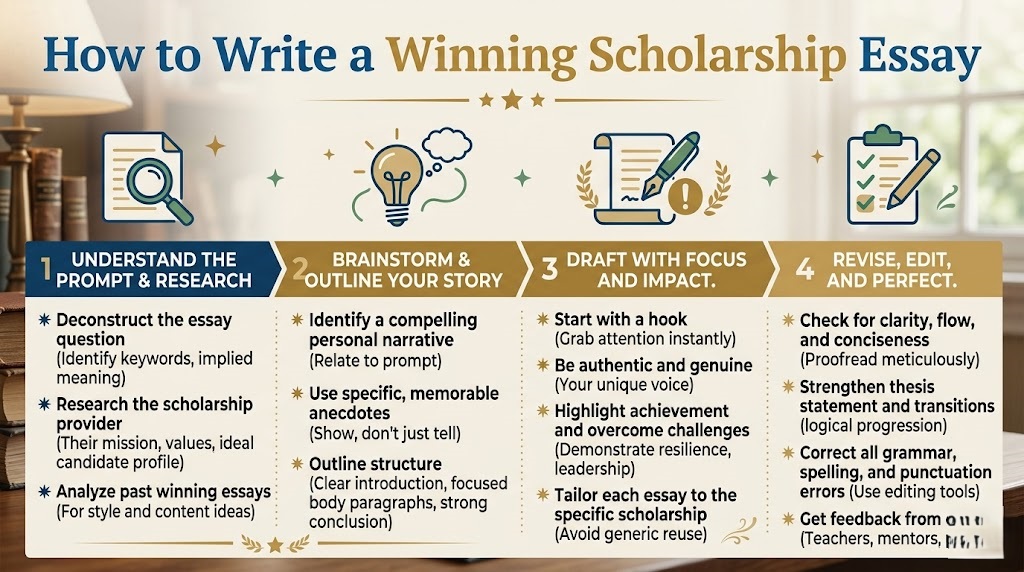
Strategic approach for building fellowship eligibility without extensive formal employment: document your informal and community engagement as systematically as you would document formal employment. If you have been running a community initiative, keep records of activities, people served, and outcomes. Fellowship applications referencing specific informal activities with specific numbers are more compelling than applications describing formal employment in vague terms. One year of substantive community engagement, well-documented and specifically described, is more competitive evidence than two years of employment described generically. For essay templates that work for early-career applications, see how to write a winning scholarship essay.
Finding Referees When You Know Nobody Senior
Reference letters are where early-career applicants feel most exposed, and the anxiety is usually misplaced.
Committees want referees who have observed your work closely. They do not want famous names. A letter from a professor who taught you in a class of three hundred and cannot recall a conversation with you is weaker than one from a supervisor at a small organisation who watched you run something for two years. Panels read both kinds constantly and are not impressed by titles attached to vague praise.
Where a formal supervisor does not exist, several alternatives are generally acceptable: a lecturer who supervised your final-year project, the coordinator of an organisation you volunteered with, a client who engaged your work, a community or religious leader who can speak to a specific initiative you led, or a colleague more senior than you in a role where you had no manager.
Check what the programme requires before choosing. Some specify one academic and one professional referee, and substituting two of the same type is a compliance failure rather than a judgement call.
Make the request properly. Ask in person or by a proper email rather than a message, give at least a month, and send a package: the programme description, the selection criteria, your draft statement, and a short reminder of the specific work you did together with dates and outcomes. Referees write better letters when they are reminded of particulars, and most have forgotten details you assume are memorable.
Ask directly whether they feel able to write a strong letter. A referee who hesitates is telling you something useful, and a lukewarm letter does more damage than a letter from someone less impressive who is enthusiastic.
Using the Year Before You Apply
For most people reading this, the honest advice is that the application should not be submitted this cycle. It should be submitted next cycle, after a year spent making it a different application.
That is not a discouraging conclusion. It is the difference between one rejection and one acceptance, and a year is short against the length of a career.
What to do with it, in rough priority. Start or take over something concrete in the first month, because everything else depends on having a record by the time you apply. Secure one substantive responsibility at work or in a volunteer role, ideally something with a number attached to it. Build the relationship with two referees deliberately, which means working closely enough with them that a specific letter is possible. Sit any required language test early, since results last two years and this removes a common failure. Read three successful applications if you can find alumni willing to share, which is the single most useful preparation available and is asked for far less often than it is granted.
Halfway through the year, write a full draft application even though you will not submit it. The gaps become obvious in a way they never do while the application is hypothetical, and you have six months left to fill them.
Apply to something smaller in the meantime. A local grant, a national youth programme, a university fellowship. Winning a modest award does three things: it produces a result to describe, it gives you experience of the application process, and selection panels treat prior competitive selection as meaningful evidence.
For the mechanics of the applications themselves, see our guides to fully funded fellowships in 2026 and writing a winning scholarship essay.