Fully Funded Fellowships 2026 Open to Applicants From Developing Countries
The most important distinction to draw before diving into fellowship programs is the one between fellowships and scholarships, because conflating them leads to wasted applications. A scholarship is primarily an academic funding mechanism: it pays for a degree. A fellowship funds a person. The difference shapes everything about how you apply, what you emphasize, and which programs you should be targeting in the first place.
Mandela Washington Fellowship (YALI)
Value: Travel + accommodation + professional development + networking | Open to Sub-Saharan Africa
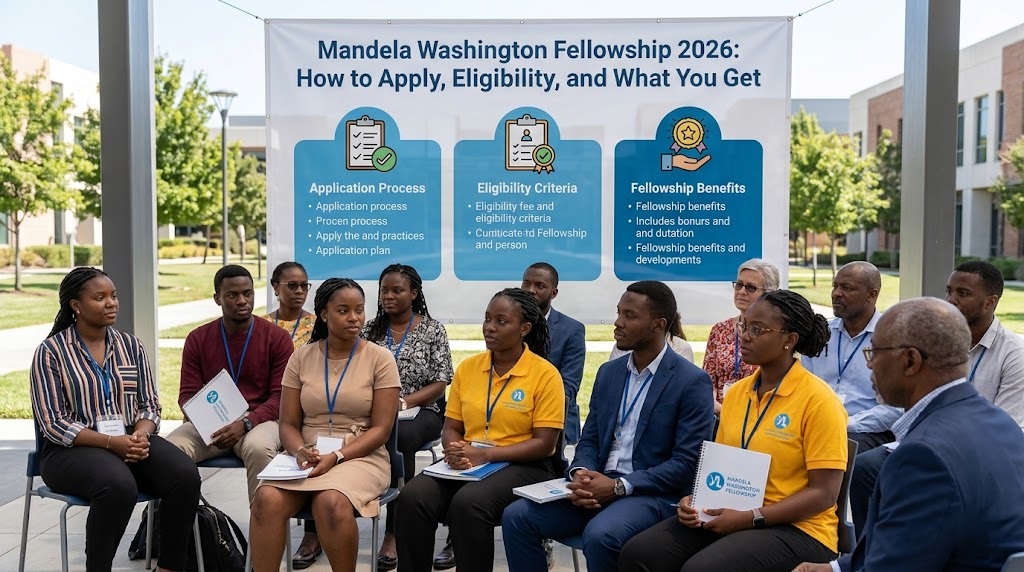
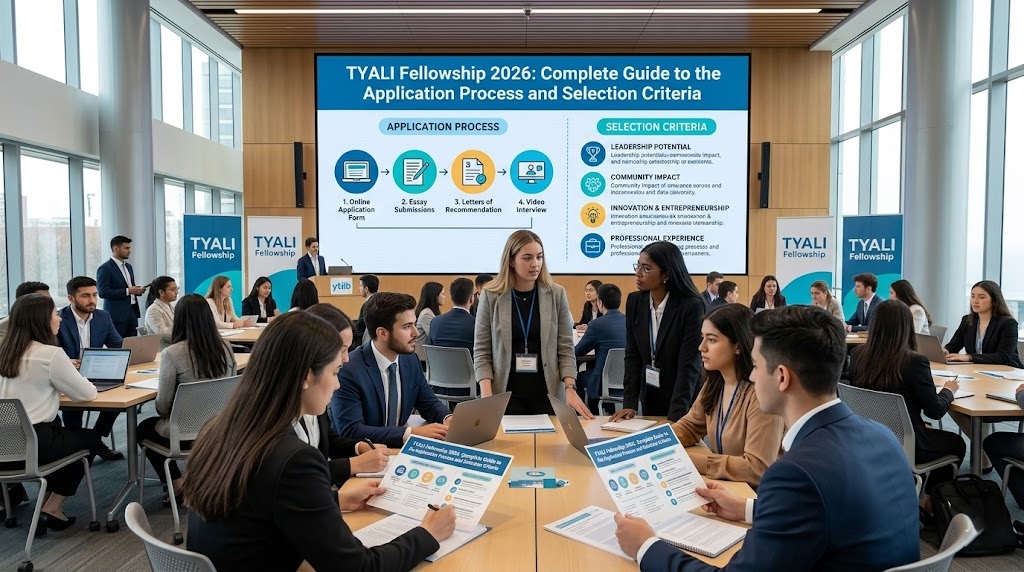
The Mandela Washington Fellowship is the flagship program of the Young African Leaders Initiative (YALI), funded by the US State Department and administered by IREX. Up to 700 young African leaders per year spend six weeks in the United States for an intensive leadership institute at a US university, followed by a summit in Washington DC. The program covers all costs - flights, housing, meals, and program fees. A subsequent professional development experience (PDE) is available for alumni. The selection is based on demonstrated leadership - not academic credentials alone. Applicants must be Sub-Saharan African citizens aged 25–35 with demonstrated leadership in business/entrepreneurship, civic engagement, or public management. Applications typically open in September. mandelawashingtonfellowship.org.
Humphrey Fellowship Program
Value: Full funding including salary supplement | 10-month program in the USA
The Hubert H. Humphrey Fellowship Program brings mid-career professionals from designated countries to the United States for ten months of non-degree professional development. Fellows are placed at a host university and participate in professional affiliation programs related to their field. The program is funded by the US State Department and covers round-trip travel, living allowance, professional development funds, health insurance, and English language training if needed. Candidates must have five years of sizeable professional experience in their field, demonstrate leadership potential, and have limited prior experience in the US. Application is through the Fulbright Commission or US Embassy in your home country. humphreyfellowship.org.
African Union Fellowships
Value: Stipend + travel | For African citizens
The African Union Commission runs multiple fellowship programs for African researchers and professionals. The AU Internship Programme places graduates and young professionals in AU offices across Africa. The AU Research Grants Program funds applied research with direct continental impact. Both programs are Africa-focused and don't require international travel. For Pan-African fellows who want to work within African institutional structures, these programs deserve serious attention that they rarely receive from mainstream fellowship guides. Check au.int/en/internship.
Rotary Peace Fellowship
Value: Full funding at top universities worldwide | Any nationality
Rotary International funds approximately 110 peace fellows each year at partner universities including Duke, University of Queensland, International Christian University (Tokyo), Uppsala University, Chulalongkorn University (Bangkok), University of Bradford, and others. Fellows receive full funding for either a two-year Masters in peace and conflict studies or a three-month professional certificate program. The application requires a Rotary district nomination, which means having a relationship with a local Rotary club. The professional certificate track has been particularly accessible for mid-career practitioners who don't want to take two years out of their career. Apply through your local Rotary district. Rotary Peace Fellowships.
Schwarzman Scholars (China)
Value: Full funding at Tsinghua University | Global applicants
Schwarzman Scholars is designed to prepare the next generation of global leaders for a world where China plays a central role. The one-year Master's program at Tsinghua University in Beijing covers full tuition, accommodation, a stipend, travel, and extensive co-curricular programming. The selection is intensely focused on leadership potential rather than academic achievement. Acceptance rate is approximately 5–8%. Applications typically open in April and close in September. This program is particularly well-regarded for professionals in business, government, and NGO leadership contexts. schwarzmanscholars.org.
Atlas Corps Fellowship (USA)
Value: Stipend + housing + professional placement | International applicants
Atlas Corps places international professionals in 12–18 month fellowships at US nonprofit organizations. Fellows receive a monthly stipend, health insurance, housing support, and visa sponsorship. The program specifically recruits professionals from the Global South for placements in US social sector organizations, and the experience builds both professional skills and international networks. Applications are rolling and open throughout the year. atlascorps.org/apply.
What Makes a Fellowship Application Succeed
The most common mistake I see in fellowship applications is writing about intentions rather than track records. Fellowship committees are looking for people who have already done something - who have evidence of the capacity for impact they claim to have. "I plan to work on food security in my region" is weak. "I've spent three years building a model farm cooperative that now covers 800 smallholder farmers in my region, and I want to use this fellowship to scale the finance model that's the current bottleneck" is strong. The specificity isn't showing off. It's providing evidence. Without evidence, your stated intentions are indistinguishable from everyone else's.
The Mindset That Separates Successful Fellowship Applicants
Fellowships are not scholarships with better branding. They select on a different basis, and applicants who treat them as academic funding competitions tend to write the wrong application.
A scholarship committee is largely asking whether you will succeed at the degree. A fellowship committee is asking whether investing in you produces something beyond your own advancement. That is why fellowship applications dwell on what you have already done with limited resources, who you work with, and what you intend to build. Academic excellence is a qualifying condition rather than the argument.
Three shifts follow from this. First, lead with what exists, not what you hope for. A candidate running a small organisation imperfectly is more compelling than one with excellent grades and no track record, because the committee is extrapolating from evidence.
Second, be concrete about the constraint. Fellowships fund people who are stuck in an identifiable way: the skill they lack, the network they cannot reach, the credential that would unlock something specific. An applicant who cannot name what the fellowship would change is asking for a prize rather than an investment.
Third, accept that fit beats prestige. Each programme has a mandate, and applications that ignore it fail regardless of quality. A programme funded to strengthen public administration is not looking for the most brilliant candidate in the pool; it is looking for the one most likely to strengthen public administration.
The applicants who do well tend to apply to fewer programmes with more precision. Twelve generic applications produce twelve rejections. Four applications built around what each programme exists to do produce a different result.
Fellowship, Scholarship, Grant: What the Words Mean
The terms are used loosely and the distinctions matter when you are deciding what to apply for.
A scholarship funds study. The money is tied to a degree programme, and the obligation is to complete it. Selection weights academic record heavily.
A fellowship funds a person for a period. It may include study, but it frequently includes placement, training, research, or leadership development, and it usually carries expectations about what you do afterwards. Selection weights trajectory and potential contribution.
A grant funds a project. The money belongs to the work rather than to you, it comes with a budget and reporting requirements, and selection is about whether the project is sound and whether you can deliver it.
A bursary is usually need-based support toward costs, assessed on financial circumstances rather than merit.
The practical consequence is that the same person writes three different applications. For a scholarship, foreground the degree and why this one. For a fellowship, foreground the work and what the fellowship unlocks. For a grant, foreground the problem and the method, with yourself as the person qualified to execute it. Applicants who submit the same document to all three are visibly answering the wrong question in two of them.
Research Fellowships and Leadership Fellowships Are Different Competitions
Most confusion about fellowship applications comes from treating two quite different categories as one.
Research fellowships (Marie Skłodowska-Curie actions, Wellcome and Newton funding, national research council schemes, postdoctoral fellowships at universities) select on the quality of a proposed research question and your capacity to answer it. The proposal is the application. Host institution and supervisor matter enormously, and securing a willing host before applying is frequently the decisive step. Publication record counts. Community work does not.
Leadership and professional fellowships (Mandela Washington, Chevening, Rotary Peace, Atlas Corps, Acumen, Obama Foundation) select on demonstrated influence and intended impact. There is no research proposal. What matters is what you have built, who you have mobilised, and what you plan to do next. A strong publication record is neutral here; a thin record of actual leadership is fatal.
A third category sits between them. Policy and institutional fellowships (Humphrey, Schwarzman, the Joint Japan World Bank programme, various parliamentary and government schemes) want both: analytical capability and a plausible route into a position where it will be used.
Work out which category a programme belongs to before writing a word. The signal is usually in the eligibility criteria: a required research proposal indicates the first, a required leadership essay the second, and a required work history in a defined sector the third.
Who Reads Your Application
Understanding the composition of a selection panel changes how you write for it.
For most large programmes, the first read is done by a screener checking eligibility and completeness. This person is not evaluating quality. They are confirming that you meet the age, nationality, qualification, and experience requirements, and that every document is present. A disproportionate number of applications die here for reasons that have nothing to do with merit.
The second stage is typically a panel of three to six people scoring against published criteria. Critically, they are rarely all specialists in your field. A panel assessing a public health candidate will often include an economist, an administrator, and an alumnus of the programme. An application written in the technical register of your discipline loses most of that room.
The third stage, where it exists, is an interview panel that frequently includes programme alumni and a representative of the funder: a national embassy, a foundation officer, a ministry official. Their questions reflect institutional priorities rather than academic ones.
Two practical conclusions. Write so that an intelligent non-specialist can follow the argument without looking anything up, while including enough technical substance that the specialist on the panel is satisfied. And assume every claim will be read by someone with the sector knowledge to check it, because one of them usually does.
The Interview, Where Most Shortlisted Candidates Lose
Reaching interview usually means the written application has done its job and the field has narrowed to a handful per place. Preparation at this stage is worth more per hour than anything earlier.
Fellowship interviews probe three things. Whether the application is true: expect specific questions about a project you described, and expect them to notice if you are vague about something you claimed to have led. Whether your plan survives contact: panels press on feasibility, and the correct response to a hard question about an obstacle is engagement rather than defensiveness. Whether you fit the mandate: questions about why this programme, and what you would do if unsuccessful, are testing commitment to the purpose rather than to the funding.
Three preparations consistently help. Reread your own application the day before, because months have passed and panels quote it back to you. Prepare a two-minute and a thirty-second version of what you do, since interviews open with a version of that question and the unprepared answer wanders. And prepare an honest answer to what you would do without the fellowship: "I would not be able to proceed" is a weak answer; describing a slower, harder route shows the plan does not depend on winning.
Where the panel includes an embassy or funder representative, expect at least one question about the relationship between your work and that country's priorities. This is legitimate and answerable if you have read what the funder says about its own objectives.
Running Several Applications Without Wrecking All of Them
Applying to multiple programmes in one cycle is sensible, and it fails when the workload is managed badly.
The efficient structure is a shared core and programme-specific framing. Write one considerable document covering your background, what you have built, what you want to do, and what is currently preventing it. That core is reusable. What changes per programme is the framing, the selection criteria you are answering, and the return or impact section, which must be specific to the funder's mandate.
Referees are the constraint that limits how many applications you can run. Each one needs a month's notice, a summary of the programme, and a reminder a week before the deadline. Asking two referees to write six letters each in December is how referees stop replying. Four to six applications is the practical ceiling for most people, and applicants who attempt twelve usually submit ten weak ones.
Track the mechanics in one place: programme, deadline, documents required, word limits, referee status, and submission confirmation. Word limits in particular vary enormously and are enforced automatically, and rewriting a 1,000-word statement into 500 the night before a deadline produces predictable results.
Finally, sequence the deadlines so the earliest application is not the most important one. The first submission of a cycle is always the weakest, because you learn what the process demands by doing it. Where you can choose, put a lower-priority programme first and let it teach you before the one you care most about. For the programmes themselves and their current cycles, see our guides to fully funded scholarships and getting a fellowship without extensive experience.
Deferrals, Withdrawals, and Changing Your Mind
Circumstances change between application and start date, and the rules on this vary enough to be worth knowing before you need them.
Deferral is possible at some programmes and impossible at others. Fellowships tied to a specific cohort, a fixed training institute, or a donor's annual budget cycle generally cannot defer, because the place cannot be held open. Research fellowships and scholarship-style awards are more flexible, and a deferral for illness, family circumstances, or a delayed visa is frequently granted on request.
Ask immediately rather than hoping the problem resolves itself. Programmes deal with this regularly and respond far better to an early, honest request than to a late one. Where deferral is refused, reapplication in a later cycle is usually permitted and your previous selection is not held against you.
Withdrawing after acceptance has consequences worth understanding. For most programmes it simply means the place goes to a reserve candidate. For a few, particularly those with a signed agreement and disbursed funds, there may be a financial liability. And in a small number of cases, withdrawal without good reason is recorded and affects future applications to the same funder.
If you hold multiple offers, decline the ones you will not take as soon as you decide. Reserve candidates are waiting, the timeline for them is tight, and releasing a place early is both decent and remembered by programme staff who frequently work in the same small sector for years.
What a Fellowship Does Not Solve
It is worth being clear about the limits, because applicants sometimes build plans on expectations these programmes were never designed to meet.
A fellowship does not, by itself, change your career. Alumni who returned to an organisation with no appetite for what they had learned describe the experience as frustrating, and the difference between that and a successful return usually lies in work done before departure rather than during the programme. Arranging study leave with a role to return to, or identifying the specific position you are aiming at, matters more than anything in the curriculum.
It does not usually provide a route to permanent migration, and several are structured explicitly to prevent one. Programmes funded by foreign ministries carry return expectations, and some attach visa conditions such as a two-year home residency requirement. Applicants whose real objective is emigration should be honest with themselves about the mismatch and look at routes designed for that instead.
It rarely provides for a family. Most of these programmes fund one person, and several destination countries have restricted dependant visas. For applicants with children, this is frequently the deciding constraint and it is better confronted early than discovered at the offer stage.
And it does not substitute for a record. The programmes that matter select people who were already doing something, which means the work of becoming competitive happens before the application rather than through it. Applicants who treat a fellowship as the thing that will finally let them start have the sequence the wrong way round.