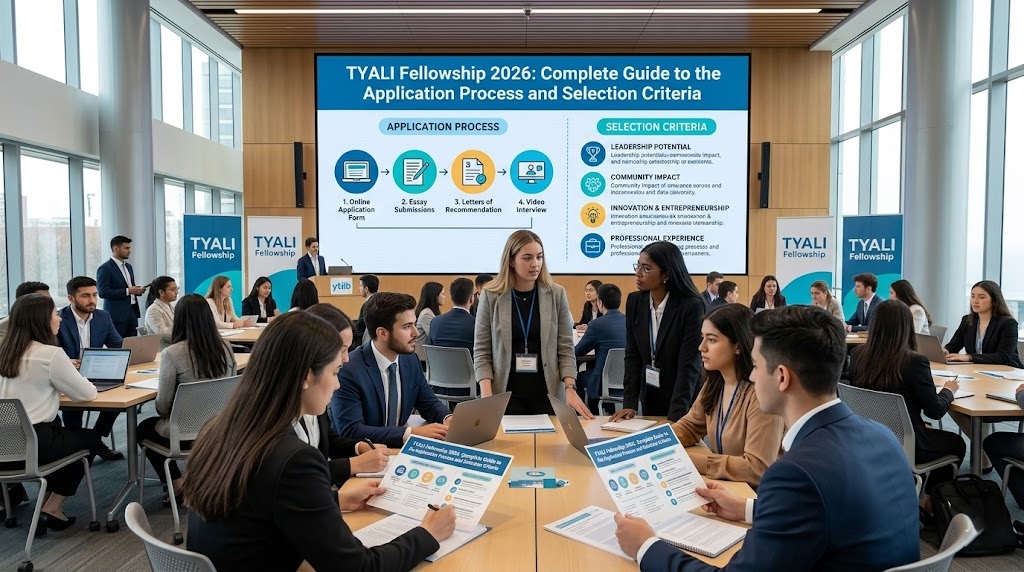
YALI Fellowship 2026: Complete Guide to the Application Process and Selection Criteria
YALI is frequently described as the smaller version of the Mandela Washington Fellowship. That framing is technically accurate but strategically misleading. YALI's Regional Leadership Centers (located in Ghana, Kenya, Senegal, and South Africa) run cohort-based programs with their own selection criteria, their own alumni networks, and their own post-program pathways that are distinct from what Mandela Washington offers. Treating YALI as a consolation prize for Mandela Washington applicants causes candidates to underinvest in their YALI applications. Treating it as the distinct program it is produces a better application.
What YALI Regional Centers Are
YALI Regional Leadership Centers were established as part of the Obama administration's Young African Leaders Initiative and are funded by the US Agency for International Development (USAID). There are four centers: the Regional Leadership Center East Africa at Strathmore University in Nairobi; the West Africa center at Ashesi University in Ghana; the Southern Africa center in Johannesburg; and the Senegal center at Fondation Sonatel. Each center runs cohort-based leadership programs of four to five weeks, focused on one of three tracks: Business and Entrepreneurship, Civil Society Management, or Public Management. The full program costs - accommodation, meals, program materials, and inter-country travel - are covered for accepted fellows.
Who Can Apply
Applicants must be Sub-Saharan African citizens aged 18–35 at the time of the program. You must be based in the geographic region corresponding to your preferred center (East Africa, West Africa, Southern Africa, or Senegal region). The program explicitly targets emerging leaders who don't yet have the experience level to qualify for the Mandela Washington Fellowship's 25–35 age range and demonstrated leadership requirement. In practice, this makes YALI a genuine entry point for talented young Africans who are building their leadership track records rather than showing an established one.
The Application Process
Applications for YALI Regional Centers open and close on a rolling basis throughout the year, with multiple cohorts per year at each center. This is fundamentally different from the annual cycle of the Washington Fellowship. Check yali.state.gov/rci for current cohort dates and application windows at each center. The application asks about your current work and leadership role, your goals for the program, and how you'll apply what you learn. The selection committee looks for people who are already engaged in something substantive - not necessarily big, but concrete and ongoing.
YALI Connect Online Platform
Even if you don't attend a Regional Center program, YALI Connect (the online learning platform at yalilearns.state.gov) offers free online courses in entrepreneurship, civic engagement, governance, and management. Completing courses on YALI Connect doesn't make you a YALI fellow, but it gives you access to a global community of over 500,000 YALI members, builds the leadership knowledge base that supports a stronger application, and - practically - demonstrates to selection panels that you take your leadership development seriously enough to pursue it independently.
YALI vs. Mandela Washington: The Honest Comparison
Both programs are valuable. YALI Regional Centers are more accessible, run multiple cohorts per year, and are better suited to emerging leaders aged 18–25 who are building their track record. The Mandela Washington Fellowship is more selective, runs once annually, involves international travel to the US, and is better suited to established young leaders with two to five years of demonstrated impact. If you're 22 and have been running a youth program for 18 months, apply for YALI. If you're 30 and have been running an organization with measurable impact for five years, apply for Mandela Washington. If you're somewhere in between, apply for both and see where you land.
The Case for YALI
The Young African Leaders Initiative is a United States government program launched in 2010 to invest in the next generation of African leaders. It operates through two main pathways: the Mandela Washington Fellowship for high-achieving young professionals, and the YALI Regional Leadership Centers for broader professional development cohorts. Both pathways are fully funded. Neither charges an application fee. And both have built alumni networks that in 2026 span over 50,000 people working across government, business, and civil society throughout Sub-Saharan Africa.
The YALI network is often the most underappreciated part of what these programs offer. The curriculum is valuable. The skills development is real. But what many alumni describe as the most lasting benefit is the relationships: a continental peer network of motivated, accomplished young Africans who are working on similar challenges in different countries. The YALI alumni network is actively maintained through regional events, online communities, and cross-country collaboration opportunities that continue long after the formal program ends.
YALI Regional Leadership Centers: The Four Sites
Ghana (Accra) | Kenya (Nairobi) | Senegal (Dakar) | South Africa (Johannesburg) | Multiple cohorts per year | Ages 18 to 35 | Sub-Saharan Africa citizens
The four YALI Regional Leadership Centers each run multiple cohort programs per year across three tracks: business and entrepreneurship, civic leadership, and public management. Each cohort runs for four to five weeks. Program costs including accommodation, meals, program materials, and inter-country travel for participants from outside the host country are fully covered. Participants do not pay for any element of the program.
The programs are rigorous and intensive. Participants engage with local business leaders, government officials, and civil society practitioners alongside peer cohort members from countries across Sub-Saharan Africa. The curriculum covers leadership frameworks, organizational management, public speaking, strategic planning, and sector-specific technical content depending on track. Alumni consistently report that the quality of co-participants is as valuable as the formal curriculum.
Multiple cohorts per year across four sites means far more total places than annual flagship programs. If you are rejected in one cycle, reapplying in a subsequent cycle within the same year is standard practice and many successful participants applied more than once before being selected. Apply at yali.state.gov.
YALI Mandela Washington Fellowship
Annual program | 700 fellows per year | Six weeks at a US university | Fully funded including flights | Ages 25 to 35 | yali.state.gov/washington-fellowship
The Mandela Washington Fellowship is the flagship YALI program. Seven hundred fellows per year, selected from tens of thousands of applicants across Sub-Saharan Africa, spend six weeks at one of approximately 50 US university campuses for intensive leadership training in business, civic engagement, or public management. The program includes a Presidential Precept activity in Washington D.C. and is fully funded including international flights, housing, meals, and program materials.
Selection is based on demonstrated leadership and a track record of community engagement. The program does not primarily select the most academically credentialed applicants. It selects the most actively engaged young leaders who are already working on problems in their communities, businesses, and organizations. Academic credentials matter but are secondary to demonstrated action and impact. If you have been involved in community organizing, social enterprise, policy work, business development, or civic advocacy, describe those specific involvements with specific outcomes rather than general claims about leadership potential.
The acceptance rate is approximately 2 to 3 percent of applicants in competitive cycles. This is lower than many academic scholarships. Prepare your application as carefully as you would prepare for any highly selective opportunity, with specific attention to the quality and specificity of your competency examples. Vague applications are rejected at the first stage. Specific ones with clear evidence of actual impact go further regardless of how modest the scale of that impact was. Apply through yali.state.gov.
How to Make Your YALI Application Stand Out
The most consistent feedback from YALI selection advisors about rejected applications is this: applicants describe what they want to do rather than what they have already done. The YALI program is looking for leaders who are already in motion, not for people who will start leading once they receive this opportunity. The application questions about your community engagement and leadership experience are asking for your track record, not your intentions.
Specific is always better than general. Not "I am passionate about youth development." Instead: "I have run after-school mathematics coaching sessions for 40 secondary school students in my community every Saturday for the past two years. Fourteen of those students have subsequently passed their national mathematics examination on the first attempt after previously failing. I am now working with three other volunteers to expand the program to a second school." That specific description demonstrates leadership through action. The general statement demonstrates that you know the right things to say.
One practical element that many applicants underinvest in: the video component of some YALI application cycles. A clear, well-structured video where you speak confidently and specifically about your work and its impact is worth significant preparation time. Filming in a quiet, well-lit space with a simple background, speaking from prepared notes rather than fully scripted text, and editing out long pauses, will put your video submission in the top tier of what the selection committee reviews. This is a component where preparation makes a visible difference.
For the Mandela Washington Fellowship specifically, see our full breakdown at Mandela Washington Fellowship 2026. For other fellowship programs available to African leaders, see our guide to fully funded fellowships in 2026.
After YALI: Using the Alumni Network Strategically
The YALI alumni network is active and useful, but using it well requires treating it like any professional relationship network rather than a passive resource to be drawn on when needed. The alumni who get the most from the network are those who contribute to it: sharing opportunities with fellow alumni, making introductions between people with complementary work, participating in regional alumni events, and staying connected with cohort peers beyond the formal program period.
Practically, join the YALI alumni online platforms immediately upon completing your program. Connect on LinkedIn with every cohort member whose work is relevant to yours. Attend regional alumni events. Respond when fellow alumni reach out with professional requests. Over three to five years, a well-maintained YALI alumni network becomes one of the most professionally valuable relationship assets an African professional can have, particularly for anyone working in cross-border business, regional policy, or international development where knowing who is doing what in different countries is a genuine competitive advantage.
What the Selection Process Involves
Regional Leadership Center selection is lighter than the Mandela Washington Fellowship process, and applicants who treat it casually still lose places they should have won.
The written application is the main filter. It asks about your work, your community involvement, and what you intend to do with the training, and the answers are read by staff at the hosting center rather than by a large international panel. What they are screening for is straightforward: evidence that you are already doing something, and evidence that the four-week curriculum connects to it.
The most common weakness is abstraction. "I want to develop my leadership skills to make an impact in my community" describes every applicant. "I run a six-person tailoring cooperative that has outgrown my ability to manage its accounts and hiring" describes one person with a specific problem the training addresses. The second is what gets selected.
Shortlisted candidates at most centers go through an interview, often by phone or video, lasting twenty to thirty minutes. It is conversational rather than adversarial, and it is checking three things: that you are who your application says you are, that you can commit to the full residential period, and that you will attend. Withdrawal after acceptance is a real problem for the centers, and they screen for it.
Be precise about availability. The residential program requires you to be present for the whole four weeks, and applicants who mention competing commitments during the interview are frequently deferred to a later cohort rather than rejected outright.
Costs, Logistics, and What Is Covered
The Regional Leadership Center program is free to participants, and the boundaries of that are worth knowing before you plan.
Tuition, training materials, and the curriculum itself carry no charge. For the residential cohorts, accommodation and meals during the training period are generally provided by the hosting center. Local transport to and from sessions is usually arranged for residential participants.
What is frequently not covered is travel to the host city from elsewhere in the region. Support varies by center and by cohort, and some provide a travel stipend while others expect participants to fund their own journey. Ask directly before accepting a place, particularly if you are crossing a border, because the cost of an international flight plus a visa can exceed a month's income.
Cross-border participants should also budget time for the visa. Kenya, Ghana, Senegal, and South Africa each have their own requirements for regional travellers, and processing occasionally runs longer than the gap between acceptance and the start date. The centers issue supporting letters on request; ask for one as soon as you are accepted rather than when the appointment is booked.
The online track removes all of this. It carries no travel cost, runs on a flexible schedule, and covers a sizeable portion of the same material. For applicants who cannot take four weeks away from work or family, the online route is a legitimate alternative rather than a consolation prize, and completion still gives access to the alumni network.
What Happens After the Four Weeks
The training is the visible part of the program and, for most alumni, the smaller part of the value. What follows depends almost entirely on how deliberately you use it.
Each center runs alumni activity of some kind: working groups, periodic events, mentorship pairings, and in several cases small seed grants for ventures started by graduates. These are not distributed automatically. They go to alumni who stayed in contact with the center, attended things, and were visible when an opportunity appeared. The graduates who disappear after the closing ceremony receive nothing further, and they make up a large share of every cohort.
Several centers maintain partnerships with local employers, incubators, and funders who specifically recruit from the alumni pool. Ask the center staff directly what exists, because it is rarely published and changes as partnerships come and go.
The regional dimension is the part most alumni underuse. A cohort brings together people from across a dozen countries who are working on comparable problems in different regulatory environments. Cross-border collaborations, market entry through a classmate's country, and joint applications for regional funding all come out of these cohorts regularly, and they come out of relationships maintained after the program rather than during it.
A practical habit that works: leave with contact details for everyone, and schedule a genuine conversation with five or six people in the three months afterwards. Not a group chat message: an actual conversation about what each of you is working on. That small effort is what separates alumni who describe the program as transformative from those who describe it as an interesting month.
Why Applications Get Rejected
Rejections cluster around a handful of avoidable problems.
Eligibility misread. Age limits, nationality requirements, and residence conditions are checked first and applied strictly. An applicant outside the stated age range is removed before anyone reads the essays, and every cycle produces people who applied anyway hoping for discretion.
Generic answers. Applications that could have been submitted by any of ten thousand people are the single largest category. Specificity about what you do, where, and with whom is the cheapest available improvement.
No demonstrated activity. The program selects people who are already leading something, however small. A candidate with ambitions and no current involvement in anything is a harder case than a candidate running a modest project competently.
Mismatch between track and background. The business, civic leadership, and public management tracks are separate competitions with separate panels. Choosing a track that does not match your experience puts you against a field you are not equipped to compete in. Choose based on what you do, not on which track sounds most impressive.
Late or incomplete submission. Portals close on time and applications missing a required field are not reviewed. Submit several days early.
Rejection is not a permanent judgement. Reapplication in a later cycle is allowed and common, and a candidate who spends the intervening year building something concrete is a sharply stronger applicant the second time.
If YALI Does Not Work Out
The program is one route among several, and a rejection is a reason to look sideways rather than to stop.
For leadership development specifically, the Obama Foundation Leaders Africa program, the Tony Elumelu Foundation Entrepreneurship Programme with its seed capital component, and the Anzisha Prize for very young entrepreneurs all serve overlapping audiences with different emphases.
For those whose interest is academic rather than entrepreneurial, the Mastercard Foundation Scholars Program funds full degrees at partner universities across Africa and abroad, and is considerably larger than most applicants realise.
For mid-career professionals in government and public policy, the Chevening and Commonwealth scholarships fund a full masters in the UK, and both weight leadership and public service heavily in selection.
Regional and national programs run by African Union bodies, individual governments, and large foundations are consistently under-applied relative to the international schemes, which makes them better odds for a comparable benefit.
The through-line across all of these is that selection panels reward people who are visibly doing something now. Whatever the outcome of one application, the year spent building a project, taking responsibility for something, and producing a result that can be described concretely improves every subsequent application you make. For the closely related federal program, see our guide to the Mandela Washington Fellowship, and for degree funding, scholarships for African students in 2026.