High-Paying Jobs in Canada for Immigrants 2026: How to Apply Without a Job Offer

The most common mistake international professionals make when targeting Canada is treating it as a single job market. It is not. The version of Canada that dominates the conversation (Toronto and Vancouver, Express Entry draws, six-figure tech salaries) is real, but it is not the whole picture, and for many applicants it is not even the most accessible entry point. A 470 CRS score that keeps getting passed over in major draw cycles may be more than sufficient for a Provincial Nominee Program stream, a healthcare role in a smaller province, or a skilled trades pathway that has been hiring continuously throughout 2026. The question is not whether Canada is accessible. The question is which pathway fits your specific profile.
Why Canada Still Needs Immigrants Urgently
Canada's aging workforce problem is structural. The country adds roughly 400,000 new immigrants per year partly because domestic population growth can't fill the jobs that baby boomer retirements are vacating, and partly because sectors like healthcare and construction are generating demand that Canadian graduates alone can't meet. In practical terms for skilled foreign workers: employers are motivated to hire internationally, immigration pathways have been simplified in several sectors, and some occupations draw at CRS scores markedly lower than the federal pool average.
That last point is the one most people miss. The Express Entry thorough Ranking System gives you a score, and you need an Invitation to Apply above a certain threshold. But since 2023, Canada has been running category-based draws targeting specific occupational groups - healthcare, trades, agriculture, STEM, education, and others - at cut-off scores well below the general pool. If your occupation is in one of those categories, your effective competition is a fraction of the 800,000+ people in the main Express Entry pool.
Healthcare (Nurses, Personal Support Workers, Medical Technicians)
Salary Range: $55,000–$110,000 CAD/year | NOC 31301, 33102
Healthcare is Canada's single most urgent immigration priority in 2026. Registered Nurses draw consistently in category-based rounds at scores in the low 400s. Personal Support Workers and healthcare aides, while lower-paid, have some of the highest approval rates under immigration pathways because provincial programs have dedicated streams with no federal points requirement. The catch for internationally trained nurses: credential recognition takes six to eighteen months depending on the province. Start the nursing regulatory body application before you submit your Express Entry profile, not after your ITA. Each province has its own regulatory body. Ontario's is the CNO (College of Nurses of Ontario). Check your province's requirement at IRCC's newcomer services page.
Software Developers and IT Professionals
Salary Range: $80,000–$150,000 CAD/year | NOC 21232
Toronto, Vancouver, and Montreal are genuine tech hubs in 2026, with major offices from Amazon, Google, Microsoft, and Shopify alongside a thriving startup ecosystem. Software developers draw well under both the STEM category-based draws and the general federal pool. The LMIA exemption under the Global Talent Stream allows tech companies to hire international workers in under two weeks for specific high-demand occupations - well faster than any other Canadian work permit pathway. If you have a job offer from a designated employer in tech, the Global Talent Stream is the fastest legal route to Canadian work authorization. Find the list of designated companies at canada.ca.
Skilled Trades (Electricians, Plumbers, Welders)
Salary Range: $60,000–$110,000 CAD/year | NOC 72200–72429
Here's something the tech community often misses about Canadian immigration: skilled trades workers drew at CRS scores below 400 in multiple 2025 category rounds, and housing construction demand means the shortfall is accelerating. Red Seal trade certification in Canada is a national credential that allows tradespersons to work across provinces. If you hold an equivalent certification from another country, the Red Seal Endorsement pathway gives you a route to Canadian recognition. It requires passing an interprovincial standards examination, not completing a new apprenticeship. For international electricians and plumbers specifically, several provincial nominee programs have specific streams with low points requirements and fast processing. Red Seal program details here.
Getting In Without a Pre-Arranged Job Offer
Most people think you need a Canadian job offer to use Express Entry. You don't. A valid job offer adds 50–200 CRS points, but category-based draws and provincial nominee programs frequently result in ITAs for people with no pre-arranged employment. In fact, for healthcare and trades workers, a provincial nominee certificate (which adds 600 CRS points) is often easier to obtain than a job offer for immigrants who haven't arrived yet.
The most practical approach for most applicants without a job offer: create your Express Entry profile, score your CRS points accurately, identify whether your NOC code falls into any of the current category-based draw occupations (check IRCC's category-based selection page), and simultaneously submit expressions of interest to provincial nominee programs in provinces with high demand for your occupation. Saskatchewan, Manitoba, and the Atlantic provinces have much less competition than Ontario and BC for many occupations.
The LMIA Process (For Employers Who Want to Hire You)
If you have or can obtain a Canadian job offer, the employer typically needs a Labour Market Impact Assessment (LMIA) - a government process confirming that no available Canadian worker was qualified for the role. LMIAs take three to eight months to process except in specific exemptions. The Global Talent Stream I mentioned for tech workers is one exemption. Intra-company transfers, international agreements (CUSMA/USMCA, CETA for Europeans), and Global Talent Stream occupations all bypass the LMIA requirement. If you're being hired by a company that operates internationally, ask specifically whether an LMIA exemption applies to your situation before they start the standard LMIA process.
What Most Canada Job Guides Get Wrong
Most articles list the highest-salary occupations in Canada and call them the "best immigration opportunities." That's backwards. The best immigration opportunities are the occupations where your CRS score can result in an ITA within a reasonable timeframe, combined with high enough salary to make relocation economically worthwhile. A software developer with a 480 CRS score can reasonably expect an ITA. A general manager with a 510 CRS score might wait three years for a federal draw and never receive one. The salary matters less than the pathway.
Use Canada's Job Bank to see current demand data for any occupation by province. It's free, it's updated weekly, and it tells you which provinces have more job vacancies than qualified workers - which is exactly where your chances are strongest.
Express Entry in 2026: How the Draws Work Now
Express Entry is the main federal route, and the way it selects people changed markedly when category-based draws were introduced. Understanding the change is the difference between a realistic plan and a long wait.
The system works as a pool. You submit a profile, receive a full Ranking System score out of 1,200, and wait for a draw. Score highly enough in a draw and you are invited to apply for permanent residence. The scoring rewards being under 30, holding a Masters degree, strong English or French, and existing Canadian work or study experience.
What changed is that not every draw is general. Alongside all-program draws, the department now runs category-based rounds that invite lower-scoring candidates who have experience in a targeted area. The categories in force cover healthcare and social services, trades, education, agriculture and agri-food, and French-language proficiency. A candidate with a 480 score and a nursing background can be invited in a healthcare draw while a 495 general candidate waits.
Two implications matter. First, French is the single most undervalued lever in the system. Reaching NCLC 7 across all four abilities unlocks the French-language category, where cut-offs have repeatedly landed far below general draws, and adds points directly. For a candidate stuck in the low 460s, a year of serious French study changes the outcome more than another degree would.
Second, occupation matters more than it used to. If your work sits inside a targeted category, the required score drops considerably. If it does not, you are competing in general draws where cut-offs have been high and the marginal points from age and education are hard to move.
Check your own score before building a plan around it. Candidates routinely overestimate by twenty or thirty points by assuming a language result they have not yet achieved.
Provincial Nominee Programs Worth a Serious Look
A provincial nomination adds 600 points to a complete Ranking System score, which effectively guarantees an invitation. For anyone whose federal score sits below the cut-off, this is the route that matters, and it is consistently underused because it requires more research.
Each province runs its own streams with its own shortage lists, and they diverge sharply. A software developer is competitive in British Columbia and Ontario. A welder or early childhood educator is competitive in Saskatchewan, Manitoba, and the Atlantic provinces, often with lower requirements than either large province would set.
Ontario runs targeted draws from the Express Entry pool, including a stream for candidates with a job offer and one for those in tech occupations. No prior connection to the province is needed for some streams, which is unusual.
British Columbia weights tech occupations heavily and runs frequent draws, though its cost of living absorbs much of the salary advantage.
Saskatchewan and Manitoba operate occupation-in-demand streams that do not require a job offer, with lower thresholds than most. For candidates in trades, agriculture, healthcare support, and transport, these are frequently the fastest route available.
Alberta combines an accessible stream with no provincial income tax, which materially changes take-home pay.
Atlantic Canada (Nova Scotia, New Brunswick, Prince Edward Island, Newfoundland and Labrador) runs a dedicated immigration programme built around employer designation, with lower language and experience requirements than the federal route.
The trade-off is a commitment, moral if not legal, to settle in the nominating province. Nominations are granted on the expectation that you intend to live there, and leaving immediately is both visible and unwise while your status is still conditional.
Credential Recognition, the Step That Delays Everybody
The gap between arriving in Canada and working in your profession is, for many regulated occupations, longer than the immigration process itself. Planning for it before you arrive saves years.
Two separate things are often confused. An Educational Credential Assessment is a document confirming your foreign degree is equivalent to a Canadian one. It takes a few weeks, costs around CAD $200 to $300, and is only for immigration points. It does not let you practise anything.
Professional licensure is the real obstacle, handled separately by a regulator in each province. Doctors, nurses, pharmacists, engineers, teachers, lawyers, accountants, and most trades all require it, and the requirements differ province to province for the same occupation.
Realistic timelines, once in Canada: internationally educated nurses commonly need one to three years including bridging programmes and examinations. Physicians face the longest road, with residency positions for international medical graduates severely limited and the process frequently running five years or more. Engineers seeking a P.Eng typically need one to two years, largely to accumulate Canadian supervised experience. Accountants converting to CPA usually need one to two years depending on the origin qualification and any mutual recognition agreement.
Three things shorten this. Begin the process from your home country, because most regulators accept applications and document verification before you arrive. Check whether a mutual recognition agreement exists between your professional body and the Canadian one, as several do for engineering and accountancy. And identify the non-regulated version of your field that you can work in meanwhile: a foreign-trained physician can work as a clinical research associate, a foreign-trained engineer as a technologist or project coordinator, while the licence is in progress.
The failure mode to avoid is arriving with savings for six months and discovering the licence takes thirty.
Where the Work Is, by Province
National shortage lists obscure how concentrated Canadian hiring is, and choosing the wrong city can cost a year.
Ontario holds the largest technology, finance, and professional services market, centred on Toronto, with Ottawa carrying federal government and defence technology work and Kitchener-Waterloo hosting a dense engineering cluster.
British Columbia is strong in technology, film production, and forestry, with Vancouver's housing costs consuming a large share of any salary gain.
Alberta remains energy-centred, including a growing renewables and carbon management sector, alongside serious healthcare shortages in Calgary and Edmonton. No provincial sales tax and no provincial income tax leave more of the salary intact.
Quebec operates its own immigration system entirely separate from Express Entry, with French required for most routes. Montreal has large aerospace, artificial intelligence research, and video game industries, and living costs well below Toronto or Vancouver.
Saskatchewan and Manitoba have persistent shortages in healthcare, trades, transport, and agriculture, the least competitive nomination streams, and housing costs a fraction of the major cities.
Atlantic provinces need healthcare workers, teachers, and skilled trades urgently, and have built immigration programmes specifically to attract them.
The strategic point is that a lower-paid job in Moncton or Regina, obtained quickly with a provincial nomination, frequently beats an unsuccessful two-year search for a higher-paid role in Toronto.
The Canadian Experience Problem
Newcomers hear a version of the same thing repeatedly: employers want Canadian experience, which is impossible to obtain without a Canadian job. The obstacle is real, and it is more tractable than it first appears.
Part of what employers are expressing is uncertainty rather than prejudice. They cannot assess an unfamiliar employer, they are unsure about workplace norms, and they worry about communication in a client-facing setting. Each of those can be addressed directly.
What works, in rough order of effectiveness: a Canadian credential, even a short one, since a six-month college certificate provides Canadian references and a local network. A bridging programme, which several provinces fund specifically for internationally trained professionals. Contract or temporary work through an agency, which has a far lower barrier than permanent hiring and converts often. Volunteering in a professional capacity for a non-profit, which produces a Canadian reference within weeks. And professional association membership, which is how a surprising share of hiring in engineering, accounting, and healthcare happens.
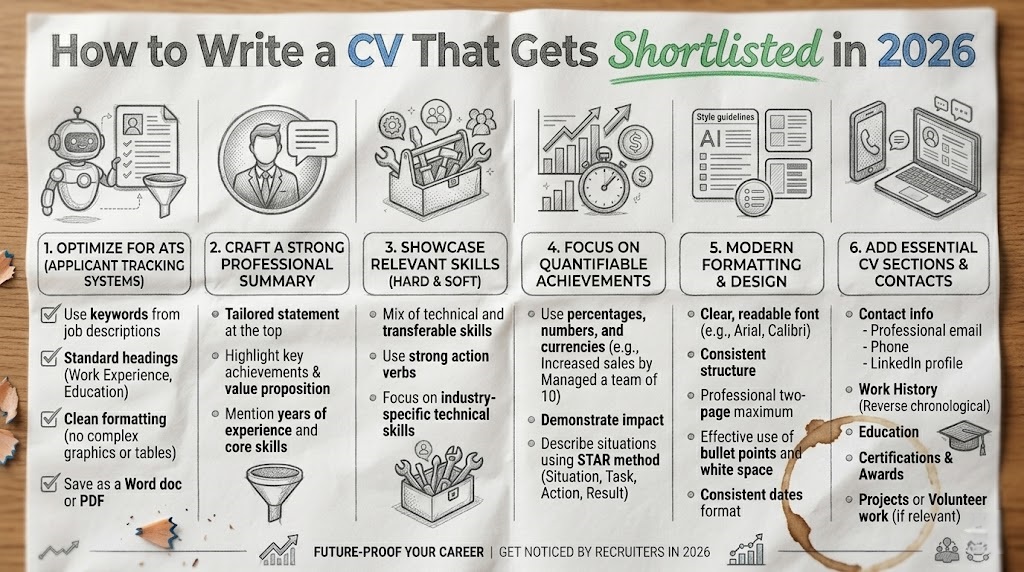
Reformat the CV to Canadian convention as well: no photograph, no date of birth, no marital status, two pages, and a line explaining each former employer's size and sector so a Canadian reader can place it.
What the Salary Leaves You After Tax and Rent
Headline Canadian salaries look strong against most of the world and compress considerably after tax and housing.
Combined federal and provincial income tax on a CAD $90,000 salary lands somewhere between 25 and 31 percent depending on province, before Canada Pension Plan and Employment Insurance contributions. Sales tax adds 5 to 15 percent at the till, again by province.
Housing is the decisive variable. A one-bedroom apartment runs roughly CAD $2,200 to $2,800 monthly in Toronto and Vancouver, $1,400 to $1,800 in Calgary and Ottawa, $1,100 to $1,500 in Montreal and Winnipeg, and under $1,200 across much of Saskatchewan and Atlantic Canada. On a $90,000 salary, that difference is worth more than most promotions.
Newcomers consistently underestimate three costs. Provincial health coverage has a waiting period of up to three months in several provinces, requiring private insurance in the interval. Car insurance for a new arrival with no Canadian driving record is expensive, frequently $2,000 to $4,000 annually in Ontario. And winter clothing for a family is a genuine several-hundred-dollar outlay nobody budgets for.
Arriving with six months of expenses rather than the minimum settlement funds required is the single most useful piece of financial preparation.
Mistakes That Cost Years
A short list, drawn from patterns that recur constantly.
Paying a consultant who is not licensed. Only regulated Canadian immigration consultants and Canadian lawyers may represent you for a fee. The register is public and checkable in two minutes. Unlicensed agents charging thousands for a form you could file yourself are the most common way newcomers lose money.
Buying a job offer. Arrangements where someone sells an LMIA-supported offer are illegal, widespread, and result in a permanent misrepresentation ban if discovered. The five-year bar is not worth the points.
Rounding up on the application. Misrepresentation findings carry a five-year exclusion and follow you. An honest weaker application always beats an embellished stronger one.
Letting language scores expire. Test results are valid two years and profiles sit in the pool for twelve months. Candidates lose invitations to an expired certificate more often than to a low score.
Ignoring the provincial route. Waiting eighteen months for a federal draw while a nomination stream in a smaller province was open the whole time is the most common avoidable delay in the system.
For the broader international picture, see our guides to jobs in Europe with visa sponsorship and studying in Canada, which remains one of the most reliable routes to permanent residence.