How to Get Strong Letters of Recommendation in 2026: Who to Ask and What to Send Them

Almost every competitive application you will make asks for references, and almost nobody prepares for that part. Applicants spend weeks on an essay and then email a former lecturer three days before the deadline asking for a letter. The result is predictable: a short, warm, generic paragraph that confirms you existed and tells the committee nothing.
References carry more weight than applicants assume, particularly in graduate admissions and government-funded scholarships, because they are the only part of your file that someone else wrote. October to January is the busiest deadline stretch of the year. If you are applying in this cycle, this is the week to start.
Who to Ask
The instinct is to ask the most senior person who knows your name. That is usually the wrong choice.
Committees are reading for evidence: specific things you did, in situations the writer observed directly. A professor who supervised your final-year project and can describe how you handled the moment your data collapsed writes a stronger letter than a dean who taught you in a hall of three hundred and can only say you were among the better students.
Match the referee to what the application is assessing.
- Graduate admissions and research funding want academic referees who can speak to your capacity for independent work: a dissertation supervisor, a project supervisor, a lecturer whose seminar you contributed to substantially.
- Professional scholarships such as Chevening, Commonwealth, or DAAD EPOS usually want a mix: one academic and one employer. Several schemes require the employer letter specifically, and some want confirmation that your post will be held for your return.
- Jobs want a direct line manager. A peer or a client is an acceptable substitute where using your current manager would expose a job search.
Read the requirement before choosing. Submitting two academic referees where the scheme asked for one academic and one professional is a compliance failure, not a judgement call, and it can remove an otherwise strong application.
If you graduated years ago and have lost touch with your lecturers, this is recoverable. Write to the department, explain what you studied and when, and ask whether the relevant staff member is still there. Academics write letters for former students regularly, and a reminder of your project title and year does more work than you would expect.
How to Ask
The request itself changes the quality of what you get back.
Ask early. Four to six weeks before the deadline is reasonable. Two weeks is tight. Three days is an imposition, and the letter will read like one.
Ask whether they can write a strong letter, not whether they will write one. The phrasing matters. It gives a reluctant or overcommitted referee a graceful way to decline, which is far better for you than a tepid letter you never see. A hesitation in the reply is information; act on it.
Ask properly. A short email or, better, a conversation. Explain what you are applying for, why, and why you are asking them specifically. People write better letters for applications they understand.
A workable template:
The request email
"Dear Professor Adeyemi, I hope you are well. I am applying for the Commonwealth Master's Scholarship for entry in October 2027, to study public health policy in the UK, and I am hoping you might be willing to write me a reference.
I am asking you because you supervised my final-year project on immunisation coverage in Kaduna, and that work is the direct basis of what I am proposing to study. The deadline for references is 20 October.
If you are able to write a strong letter, I will send you a short pack with the scheme criteria, my draft statement, my CV, and a reminder of the project and its outcomes. Please do say if you would rather not, or if the timing is difficult. Thank you for considering it."
That message does four things: it names the scheme and the deadline, it explains why this referee, it offers the supporting material, and it leaves an exit.
What to Send Them
This is the step that separates a specific letter from a generic one, and most applicants skip it entirely. Once someone agrees, send a single email with everything they need.
- The scheme's selection criteria, copied in or linked. A referee writing to the criteria produces a far more useful letter than one guessing at what matters.
- Your draft personal statement or essay, so the letter reinforces the same picture rather than describing a different person.
- Your CV.
- A reminder of your work together: the module or project, the dates, what you produced, and what came of it. Include numbers where they exist.
- Two or three specific moments you would be glad to see mentioned. Not instructions, prompts. "You may remember I rebuilt the survey instrument after the pilot failed" is a gift to a busy writer.
- The deadline, the submission method, and what happens next. Say whether they will receive a portal link, whether the letter must be on headed paper, whether a signature or stamp is required, and any word limit.
Put the deadline in the subject line. Your referee is writing several of these.
Format requirements are worth stating explicitly because they differ. Some schemes require a hand signature and an institutional stamp. Some require the letter to be uploaded by the referee from an institutional email address. Some cap it at 500 words. A brilliant letter that fails a format rule is still a failed letter.
Should You Draft It Yourself?
You will sometimes be asked to. It is common in several countries and industries, and it puts applicants in an awkward position.
Where a referee asks you to provide a draft, the honest approach is to write a factual account of the work you did together, in plain language, and let them rewrite it in their own voice. Supply evidence, not praise. Your draft should read like a record of what happened, and the referee should be the one who adds the judgement.
What to avoid is writing the finished letter yourself, adding the superlatives, and having it signed unchanged. Readers notice when the letter and the personal statement share a vocabulary and a rhythm, and the effect is worse than an ordinary letter honestly written.
There is a related problem now. Surveys suggest a meaningful share of referees use generative AI to help draft letters, and admissions readers report that they notice. Committees generally accept AI assistance for structuring or tidying a letter, and react badly to letters that are fluent, effusive, and empty of specifics, or that describe interactions that did not happen. The defence, from your side, is the same as always: give your referee enough concrete material that the letter could not have been written about anyone else.
The Waiver Question
US applications, and a growing number of others, ask whether you waive your right to see the letter. Under the American student records law, enrolled students can otherwise request access to letters in their file.
Waive it. Committees treat waived letters as more candid, and a non-waived letter invites the reader to wonder whether the writer was being careful. Several institutions state their preference openly, and some referees decline to write at all unless the right is waived. Harvard's graduate school, among others, publishes guidance on the right to inspect letters and what waiving means in practice.
The practical consequence is that you should choose referees you trust, because you will not read what they write.
Chasing Without Damaging the Relationship
Referees miss deadlines. This is normal, it is rarely personal, and the application is still yours to lose.
Send one short reminder about a week before the deadline, and another two days before if the system still shows the letter as outstanding. Keep both brief and warm. Most academics and managers are grateful for the nudge rather than irritated by it.
Check the portal yourself rather than assuming. Many systems show the status of each reference, and applicants have lost places because a letter went to a spam folder or a portal link expired.
If a referee goes silent as the deadline approaches, have a backup ready. Identifying a third possible referee at the start, even if you never ask them, converts a crisis into a phone call.
Afterwards, tell them the outcome. Whether you were selected or not, a short message closing the loop is the reason they will say yes again in two years, and people who write letters remember who bothered.
Common Mistakes
Asking too late. The single biggest cause of weak letters.
Sending nothing with the request. A referee working from memory writes from memory, and memory is thin four years on.
Choosing seniority over proximity. A vice-chancellor who cannot name your project is worth less than a lecturer who can.
Using the same referees for six different schemes without telling them. Say how many letters you are asking for, and give them the full list at once so they can plan.
Ignoring the specified mix. Academic and professional referees are not interchangeable when the scheme names both.
Assuming submission happened. Verify it in the portal.
Asking someone who has reason to be lukewarm. A referee who remembers you mainly for a missed deadline will write about that, politely.
If You Have No Obvious Referees
Career changers, applicants who studied a long time ago, and people from informal work sectors all hit this problem, and it is more solvable than it looks.
Acceptable referees in most schemes include a supervisor from voluntary work, a client who engaged you directly, a community or cooperative leader who can speak to a project you ran, a mentor who has worked with you over time, or a colleague more senior than you where no formal manager exists. What matters is that they observed your work and can describe it, not their job title.
If your record is genuinely thin, the fix is upstream of the letter. Spend the next year taking on something with a defined outcome and a person who watches you do it. Our guide to getting a fellowship without extensive experience covers how to build that record deliberately.
Job References Work Differently
Everything above applies to applications that ask for written letters. Employment references follow a different process, and the mistakes are different too.
Most employers do not want a letter. They want a name and a phone number, and the conversation happens after they have decided to hire you. In many countries, including the UK and much of Europe, large employers will only confirm dates of employment and job title as a matter of policy, so the substantive reference comes from a named individual rather than from HR.
Four rules cover most situations.
Ask before you list anyone. The worst version of this is a recruiter calling someone who does not remember the project and is caught off guard. Warn each referee when you start applying, and again when a specific employer is about to call.
Prepare them briefly. Send the job description and one line on what the employer is likely to probe. If the role needs evidence that you can manage a budget, remind your referee of the budget you managed.
Do not use your current manager while job hunting quietly. Employers understand this completely. Offer a former manager, a senior colleague, or a client instead, and explain that your current employer is not aware of your search. No reasonable recruiter will object.
Know what a bad reference can and cannot be. In most jurisdictions a reference must be accurate and fair, which is why many companies restrict themselves to factual confirmation. If you left a role badly, choose someone else from that organisation rather than hoping the manager has softened.
For the stage before references are requested, see our guides to interview questions and answers and salary negotiation.
A Timeline for This Application Season
Deadlines cluster between October and January. Working backwards from the earliest one you care about:
Six weeks out. Decide who you are asking, and ask. Confirm the scheme's required mix of academic and professional referees. If anyone hesitates, replace them now rather than later.
Five weeks out. Send each referee the pack: criteria, draft statement, CV, a reminder of your work together, and the exact deadline and submission method.
Three weeks out. Check the portal to see whether letters have been submitted. Some systems email referees a link that lands in spam, and this is when you find out.
One week out. Send one short, warm reminder to anyone outstanding.
Two days out. Final check. If a letter is still missing and your referee has gone silent, contact the scheme administrator and ask what is possible. Some allow a short extension for references specifically; none allow one if you ask after the deadline.
Afterwards. Tell every referee the outcome, whichever way it went. It takes two sentences and it is the reason they will say yes next time.
One last piece of advice that applies across every application you will make: keep a running file of your own work. Projects, dates, figures, outcomes, and the names of people who saw you do it. When a deadline arrives in three weeks and a referee asks what you have been doing since 2023, that file is the difference between a specific letter and a polite one.
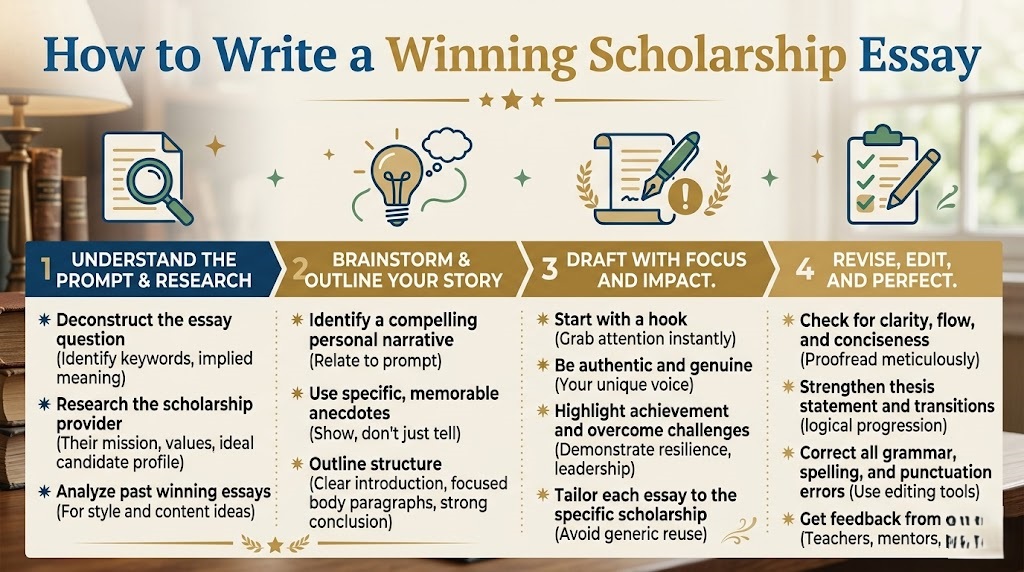
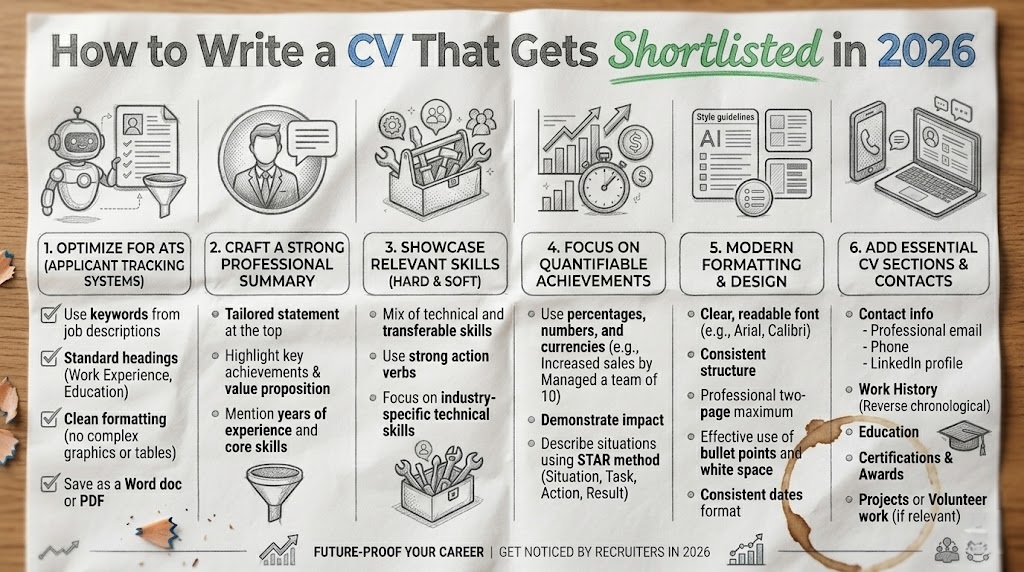
For the rest of the application, see our guides to writing a winning scholarship essay, scholarship interview questions, and writing a CV that gets shortlisted. If you are applying this cycle, the Commonwealth Scholarship and Chevening guides set out exactly which referees each scheme expects.